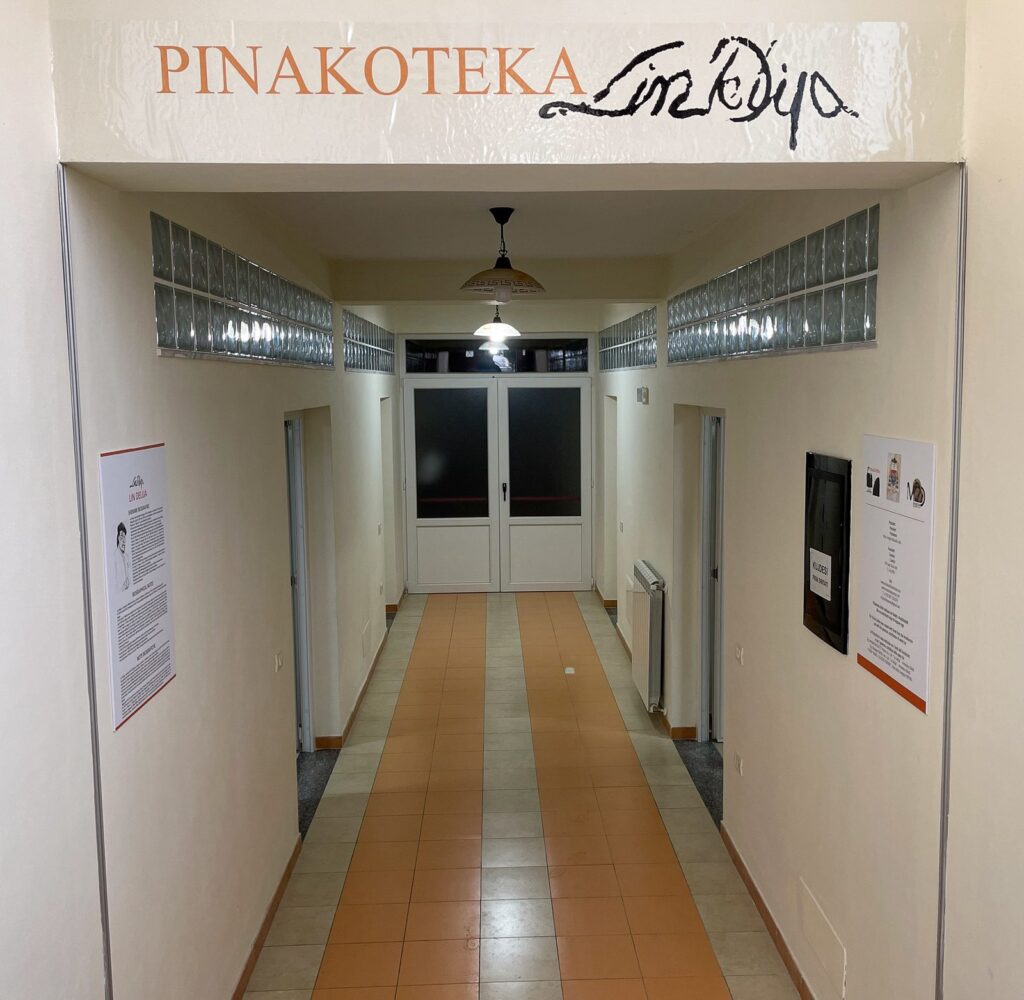
Pinakotekë “Lin Delija” · in the museum building
His love for his land, the pain of exile, and hope for a free Albania.
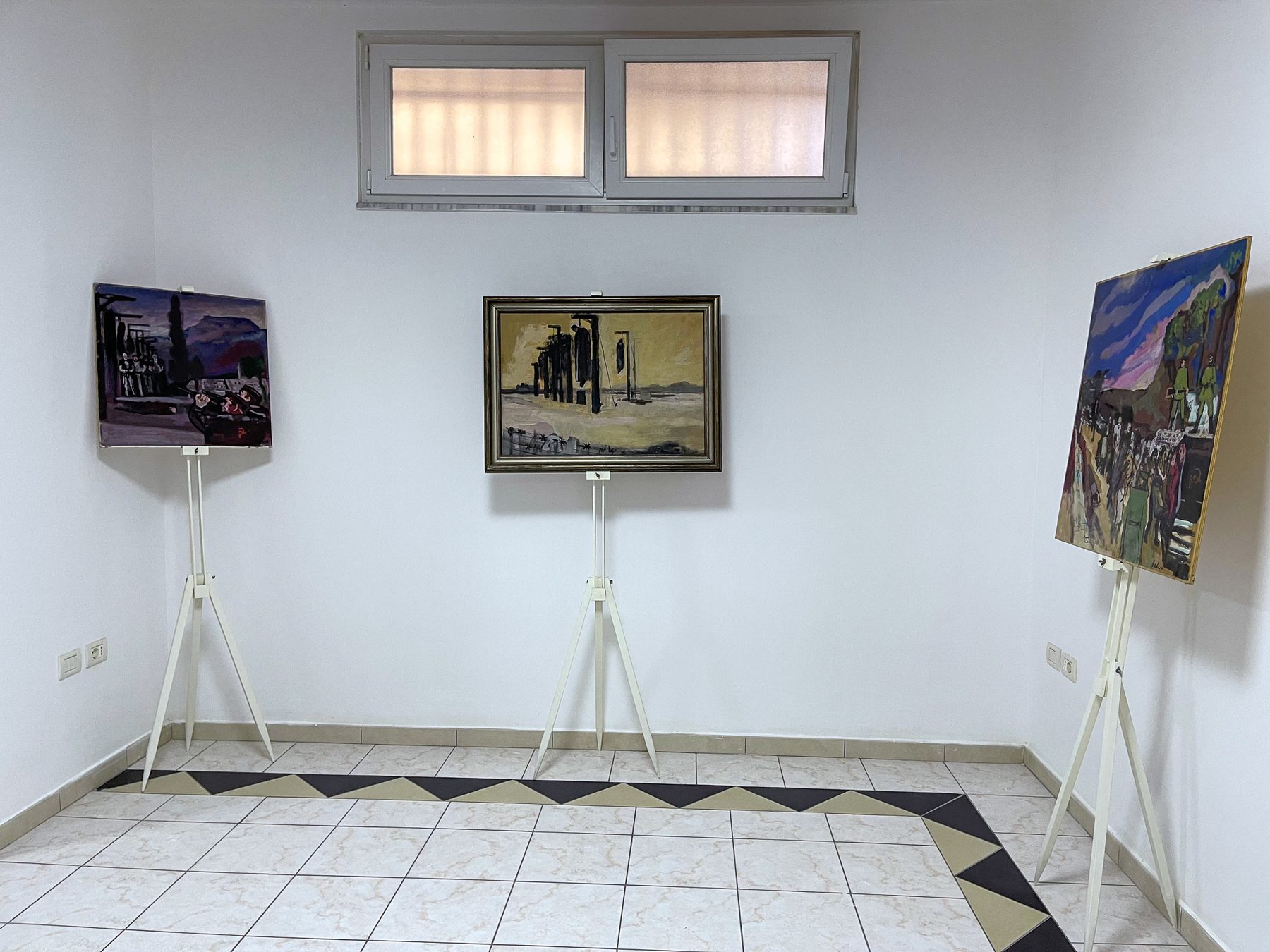
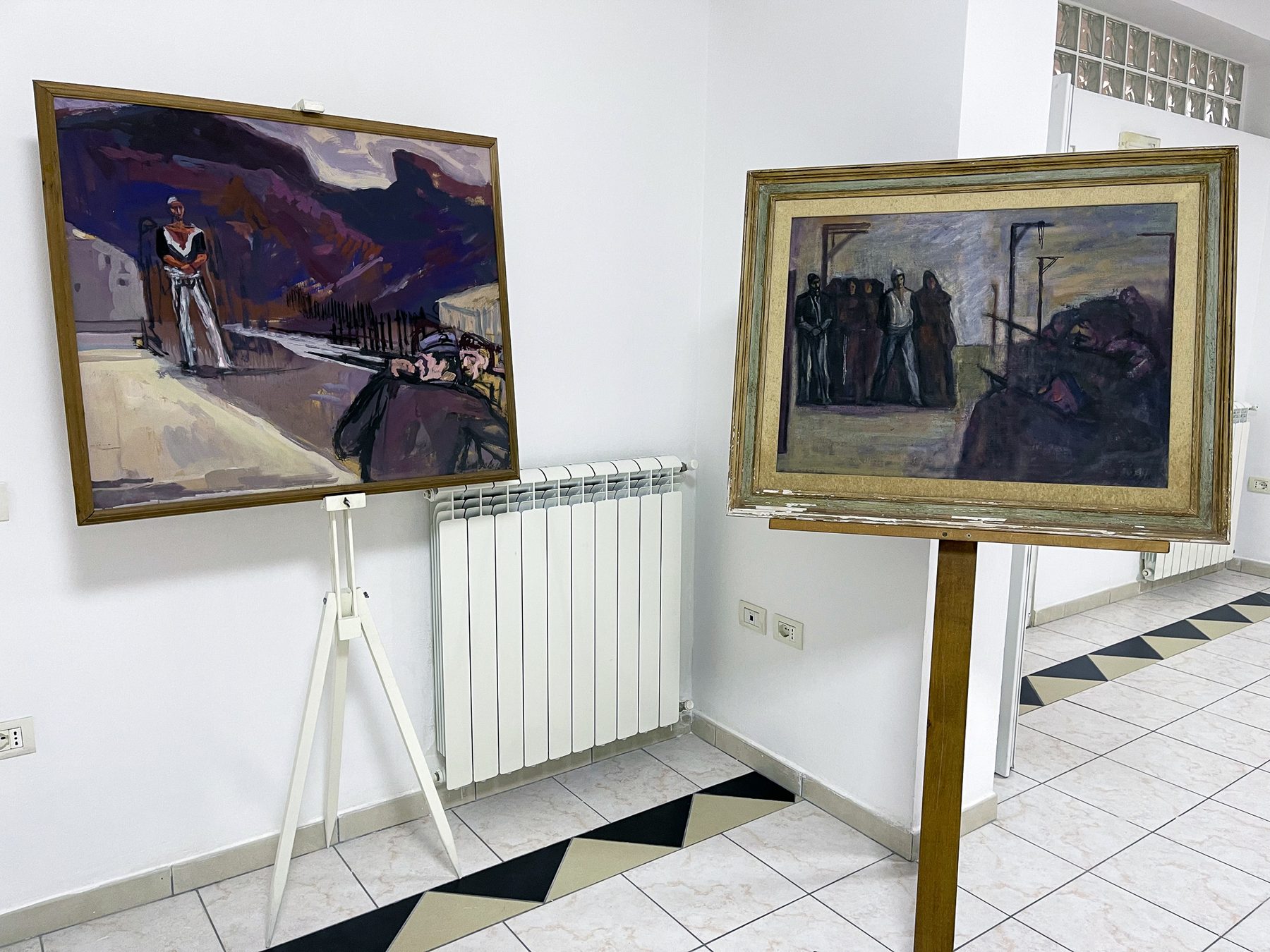
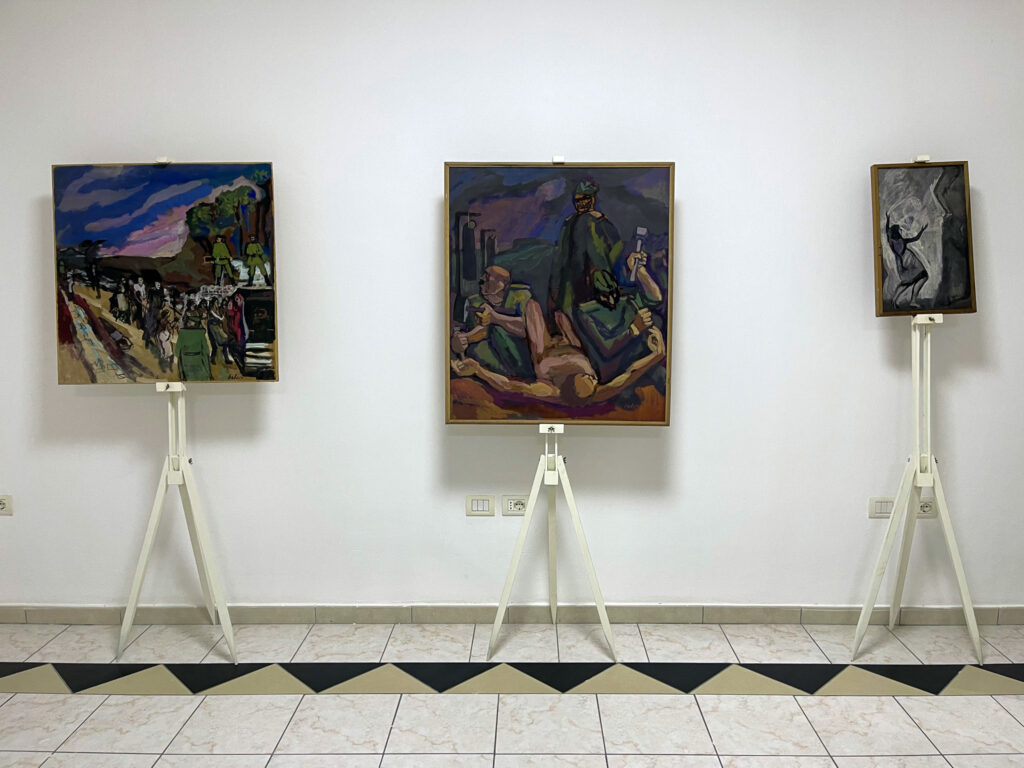
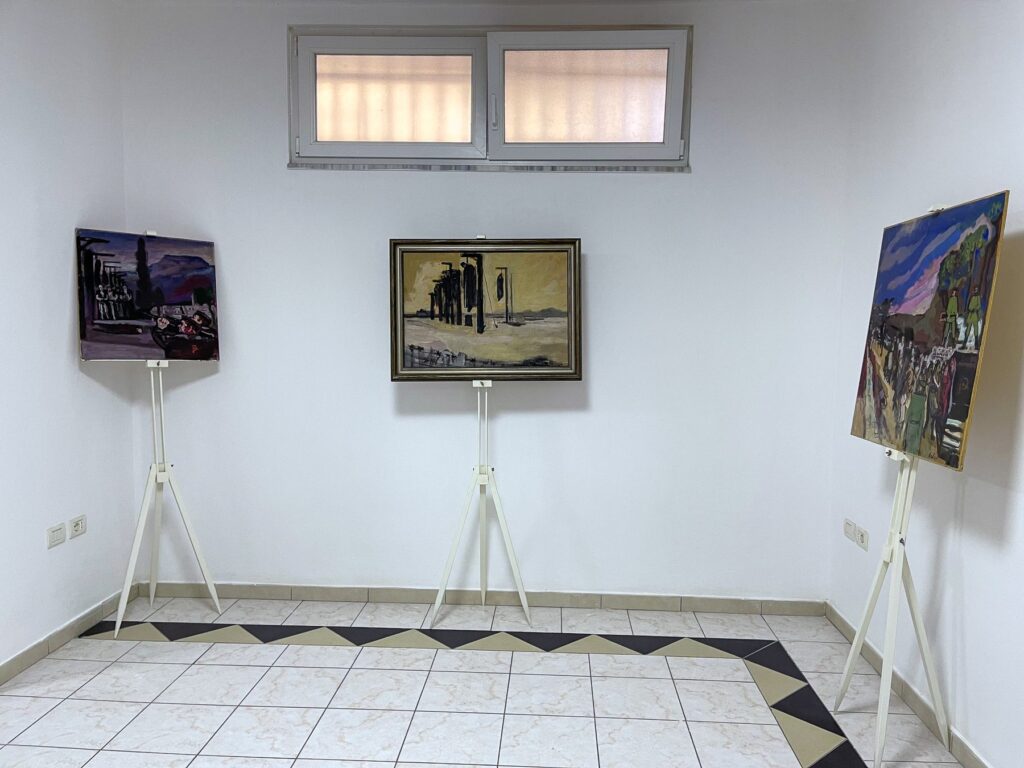
A small picture gallery dedicated to Lin Delija, “the son of this land in exile”, one of the great names of painting. Temperas from 1980–83 on two themes: faith, and the persecution of Albania.
1926Shkodër
to Rome, 1994
The gallery's mission, in the museum's words
For as long as the Church has existed, art has carried the faith. Painting in churches was called “the Bible of the poor”.
Mosaic, music and theatre have all served to proclaim the Gospel. Paintings let those who could not read or write come to know the Bible through the work of the great painters.
Culture is also an “areopagus”: a meeting place between the faith of believers and those who do not believe, a table of dialogue around beauty, in building a more human and liveable world. So the cultural centre of the Church of Shkodër-Pult, already at work through the Diocesan Museum, also includes this gallery, dedicated to one of the greatest exponents of painting: Lin Delija, this land’s son in exile.
Biografi e shkurtër · A short biography
From Shkodër to exile
The colours show where he was: Albania, then Yugoslavia, then Italy.
1926
Shkodër
Born on 3 February, son of Mark Delija, from Temal, and Luçe Hila.
1936
Shkodër
At ten he enters the Franciscans' school, then the “Illyricum” lyceum, where his talent takes off.
1940s
Herceg Novi · Zagreb
Studies in Herceg Novi, then at the Academy of Fine Arts in Zagreb.
1949
Rome
Escapes to Italy. With Koliqi's help he wins a place at the Rome Academy of Fine Arts, taught by Mario Mafai and Amerigo Bartoli. From them he learned contemporary techniques and refined his vision, blending the modern with the ethnic element, Albanian and Balkan.
1969 · 1983
Italy · Antrodoco
Founds the “Gjergj Fishta” Academy of Art, then the “Carlo Cesi” Academy at Villa Mentuccia in Antrodoco.
1994
Rome
Dies on 9 April, aged 68.
Natyra e veprave · The works on show
Two themes, one painter
Mostly from 1980–83, when he moved to tempera.
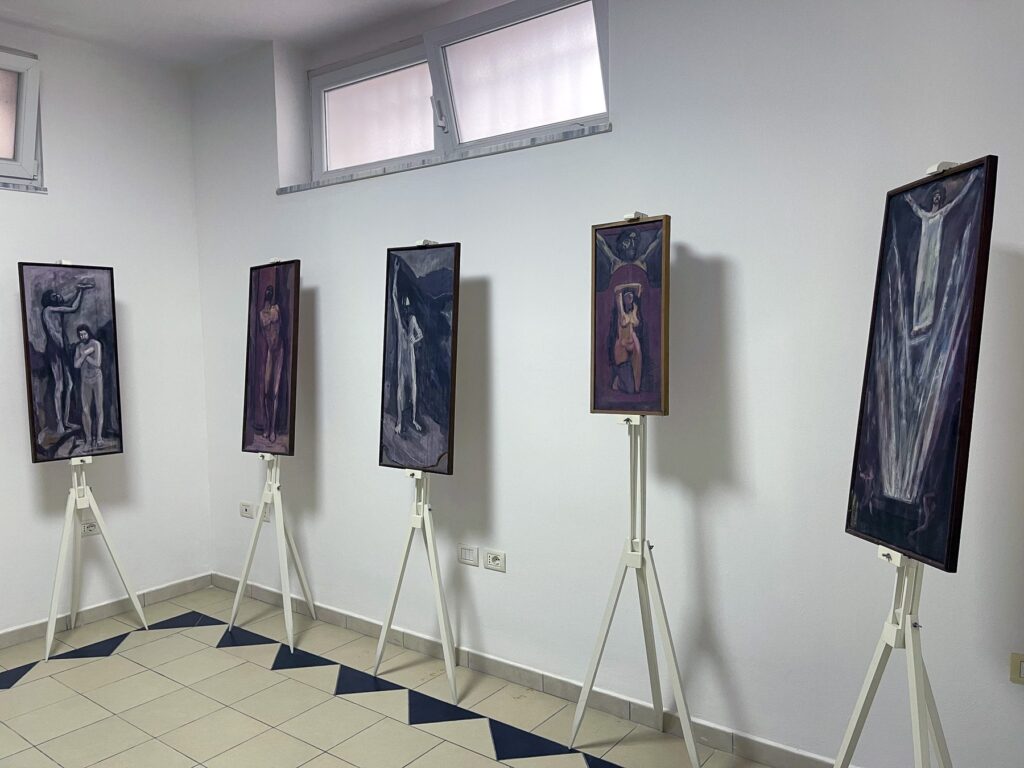
I · Tematika fetare
Faith
A line constantly present in his work, held with real consistency.
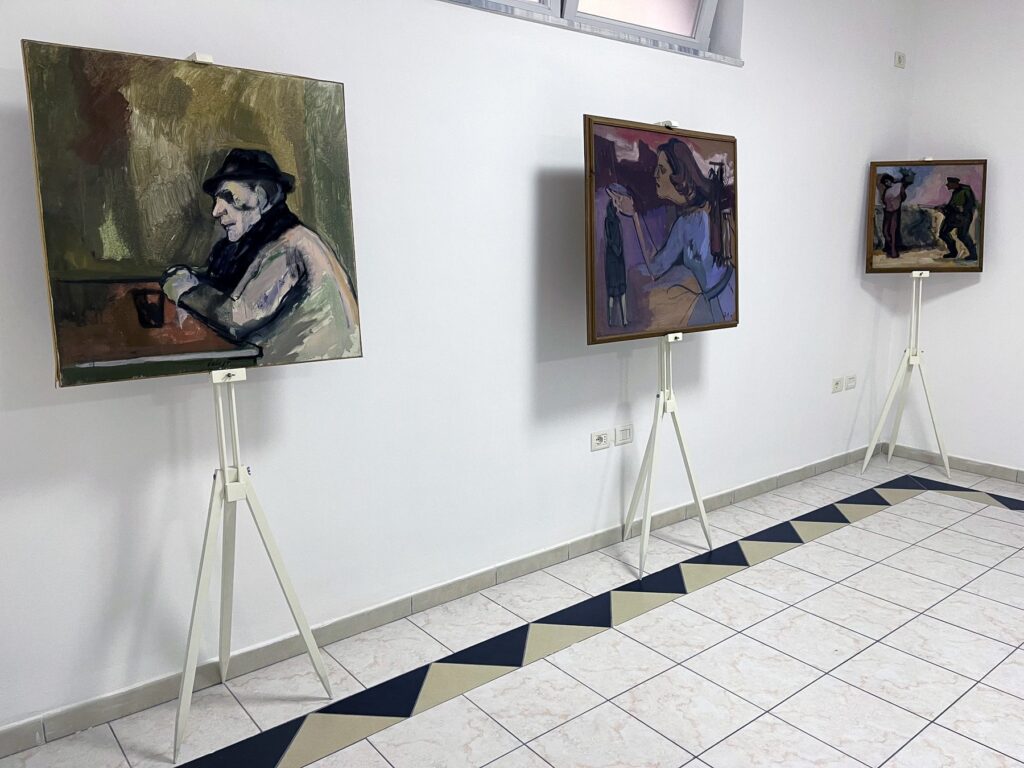
II · Persekutimi
Persecution
Here we see a politically engaged artist. The debate on political engagement runs through all of art history; today opinion is broadly positive about Delija’s engagement, above all its social side.
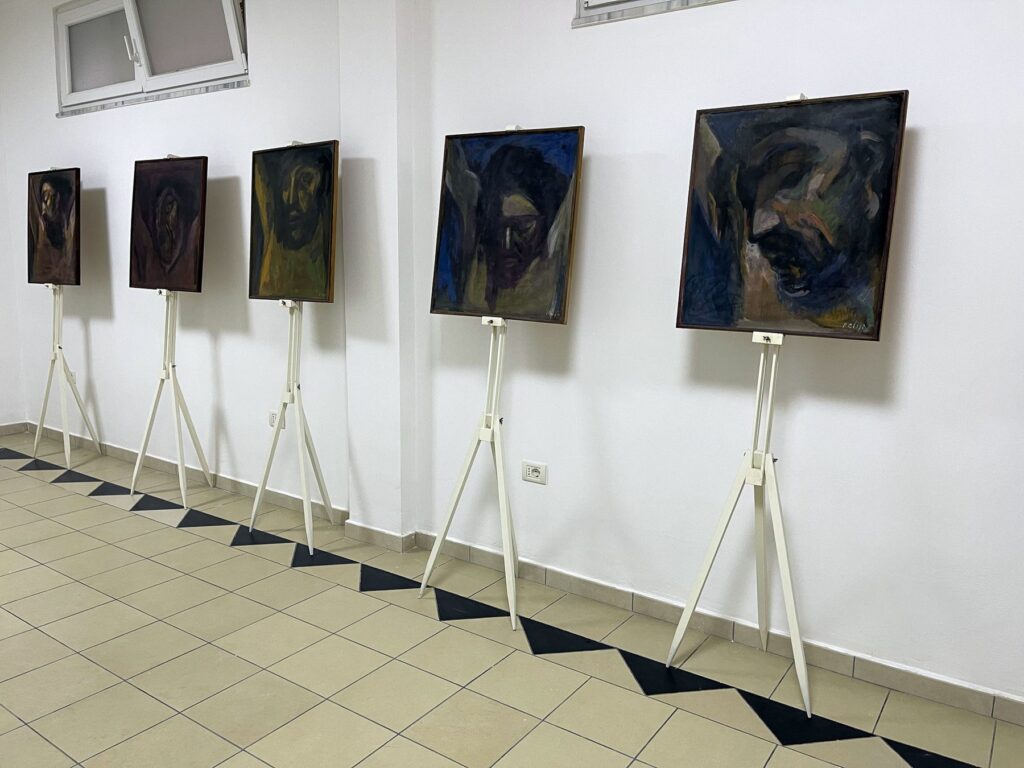
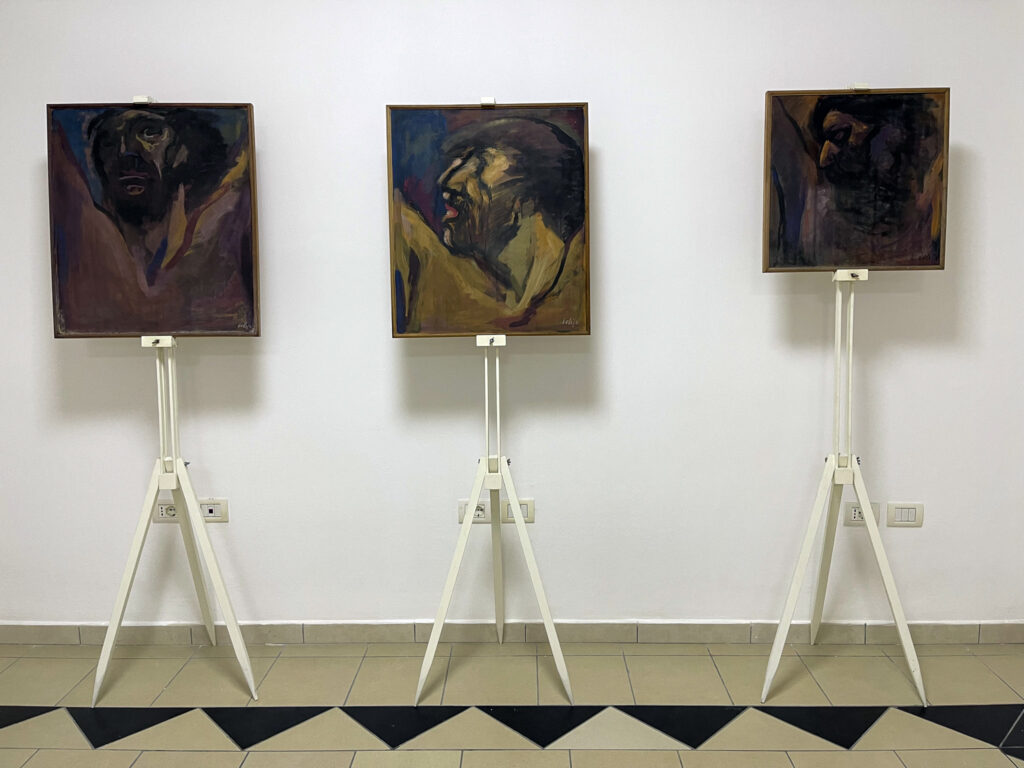
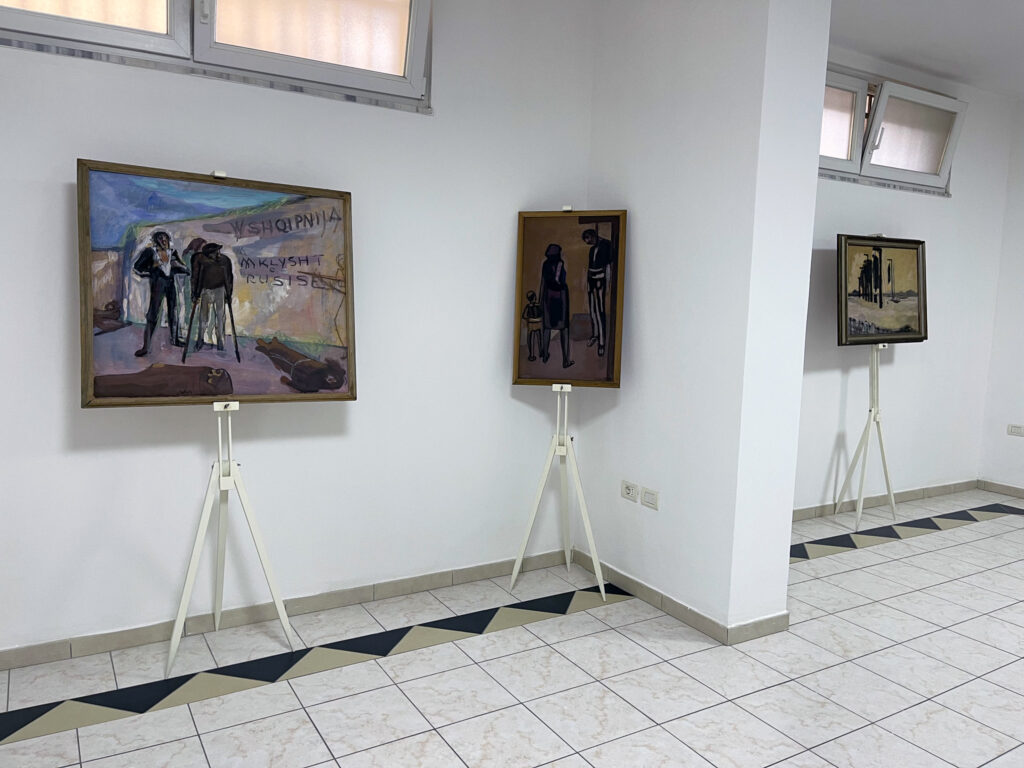
In the gallery
Tempera
Health problems, an allergy to turpentine, forced him to give up oil painting, so these works are in tempera.
In style they show the influence of early 20th-century modernist figuration, which also grew in pre-war Italy: his own teachers at the Rome Academy belonged to those currents in the 1920s and 30s. Beyond those influences stands his individuality in the brushwork and the “patches” (njolla), the way he spreads colours and tones. That is his signature: it gives his work its unique character and is a large part of his success as an artist.
How the gallery began
Two gifts brought him home
The gallery was born from the meeting of Archbishop Angelo Massafra and Mons. Eleuterio Fortino, an Arbëresh priest who collected works by Lin Delija. After his death, Fortino’s heirs brought the collection to Shkodër, the painter’s birthplace.
It joined an earlier gift of sketches, made possible by Armando Nicoletti and Giuseppe Grassi of the “Lin Delija” association in Antrodoco, where the painter spent his last years.
These two gifts made this small gallery possible. It tells of Delija’s love for his land, his pain at the distance of exile, and his hope for a free Albania under the sign of a faith found again.

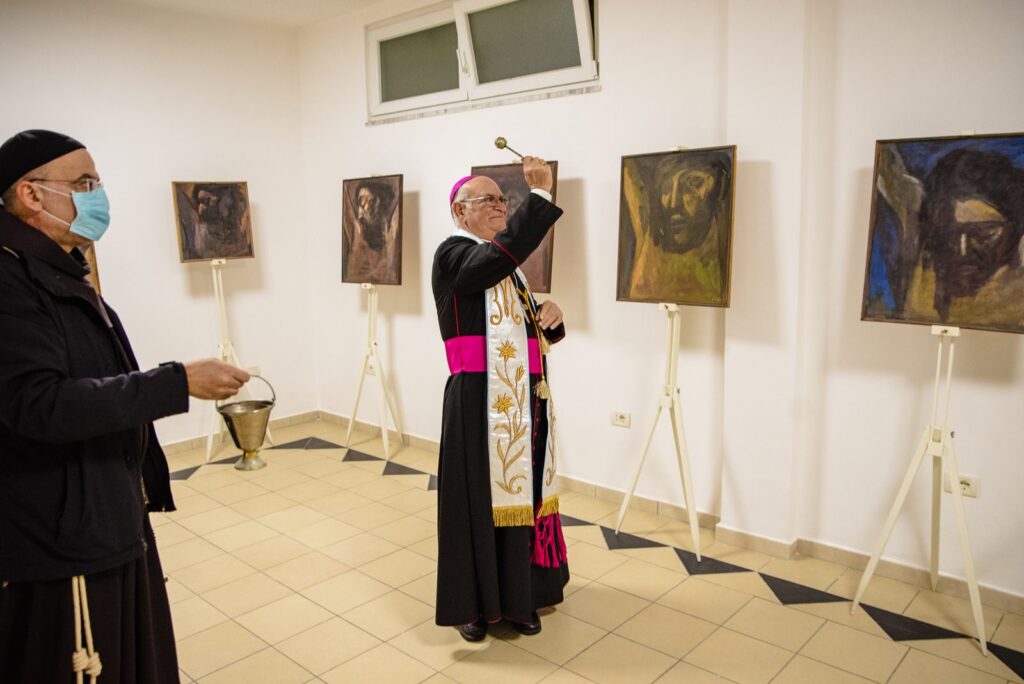
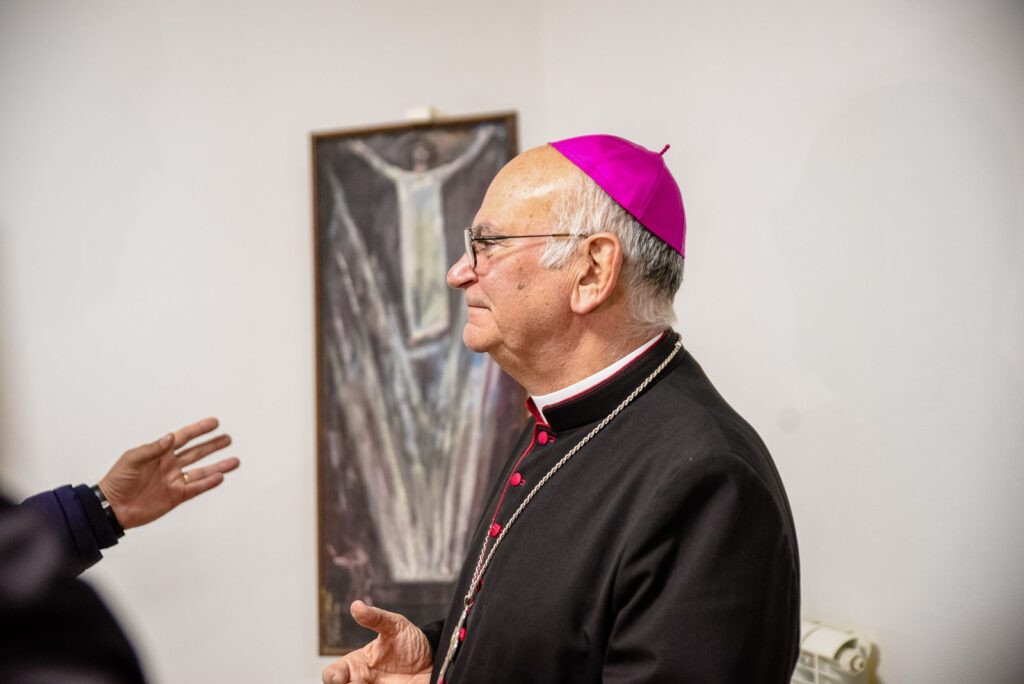
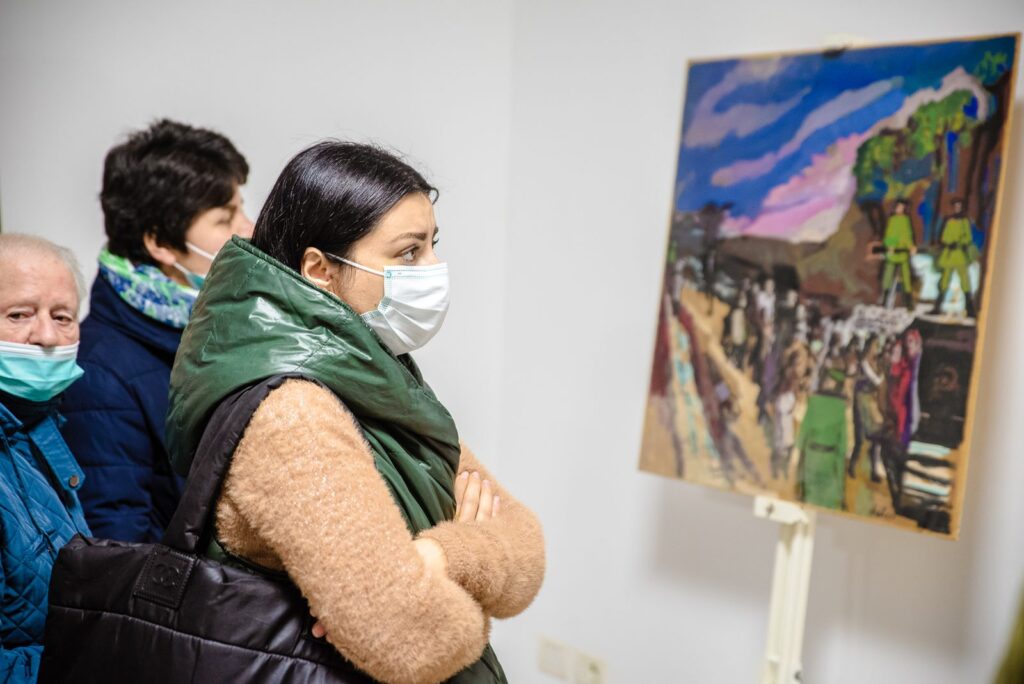
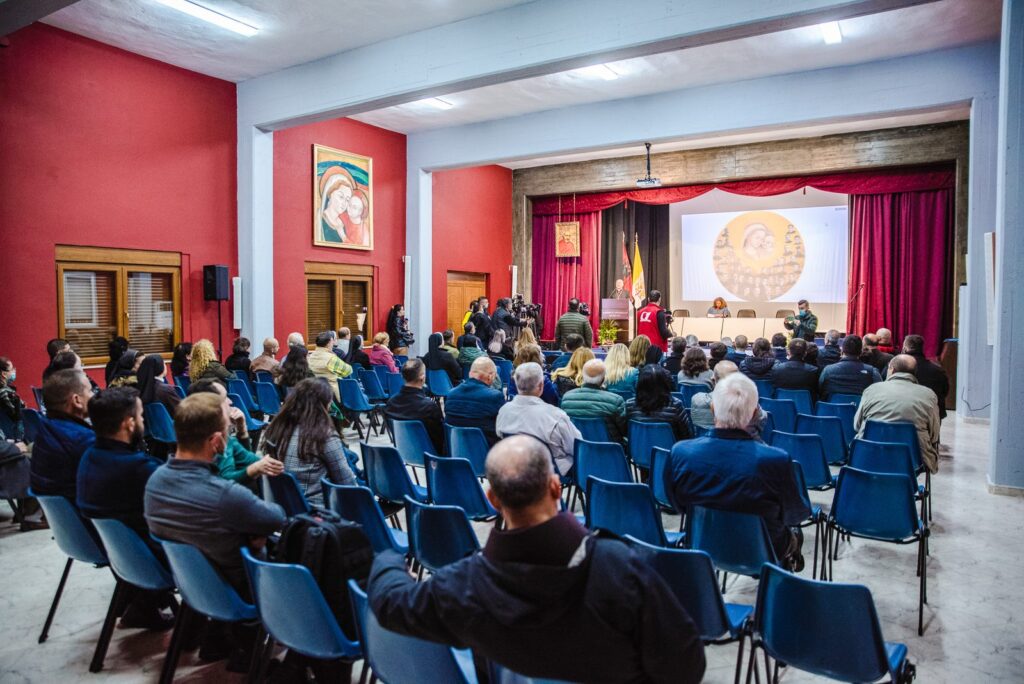
The opening of the gallery
Vizitë në Pinakotekë · Visiting the gallery
One ticket for the museum and the gallery
What you’ll see
Temperas Lin Delija painted between 1980 and 1983, on two themes: faith, and the persecution of Albania.
Hours and ticket
Same opening hours and the same ticket as the museum.
Closed · opens tomorrow at 09:00
See the museum and the gallery in one visit.