Itinerari i ekspozitës · The exhibition itinerary
Sixteen sections that let the objects speak.
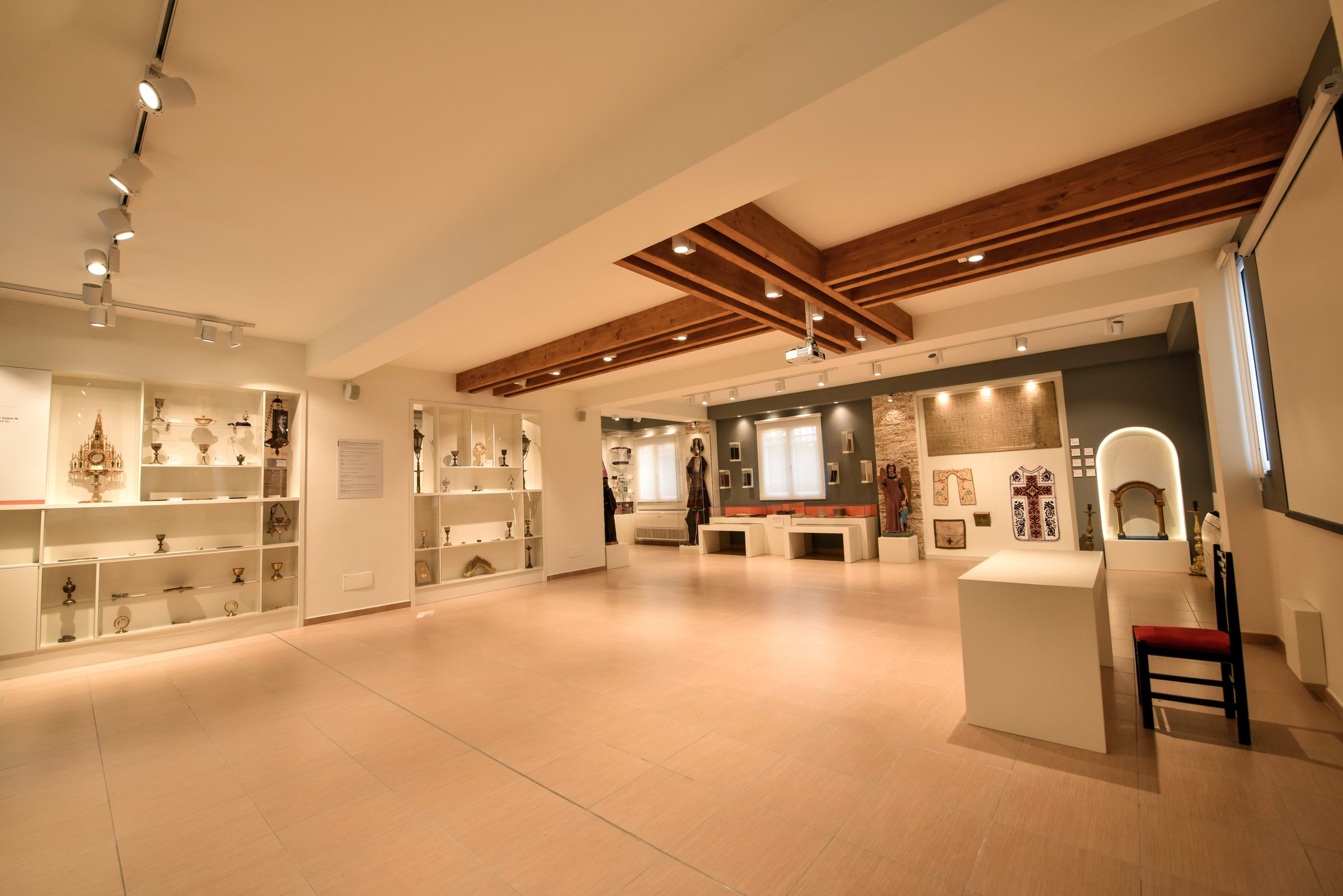
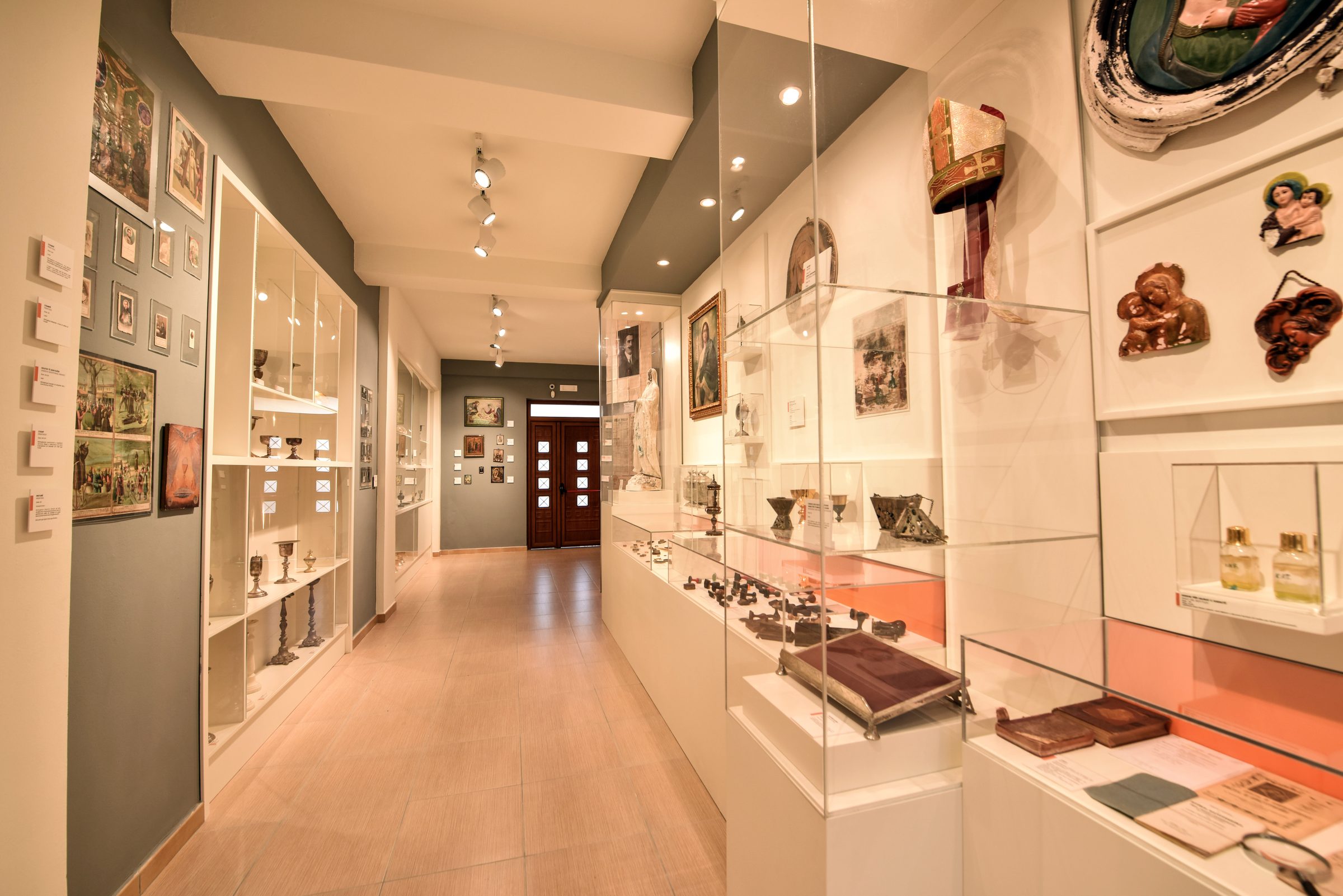
A story told section by section, with a timeline, in two parts: Places and signs in time on the ground floor, Voices, faces, testimonies in time on the first floor. Texts in Albanian and English, with multimedia in image and sound.
16seksione tematike
themed sections
What the collection holds, in the museum's words
Documents, fragmentary and complete/Works of art/Church relics/Objects of personal use and devotion/Many personal testimonies
Itinerari
Walk the sixteen sections
In the order you meet them. The names are the ones on the walls.
Kati përdhes · Ground floor
Vende dhe shenja në kohë
Places and signs in time
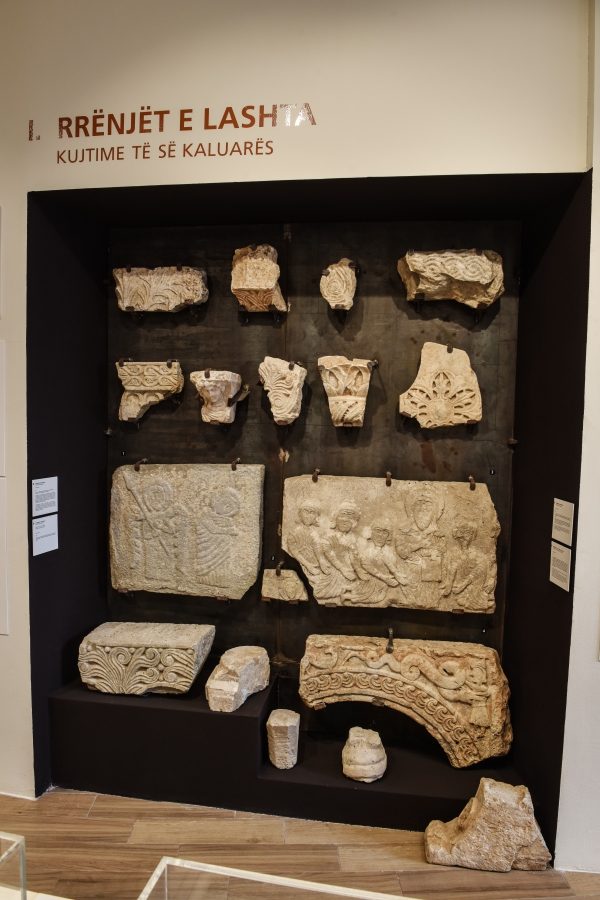
I
Rrënjët e lashta
Kujtime të së kaluarës
Ancient roots · Memories of the past
The museum’s oldest objects: a Roman coin from the time of Constantine, a copy of the Roman map Tabula Theodosiana, and carved stones from 12th- and 13th-century monasteries.
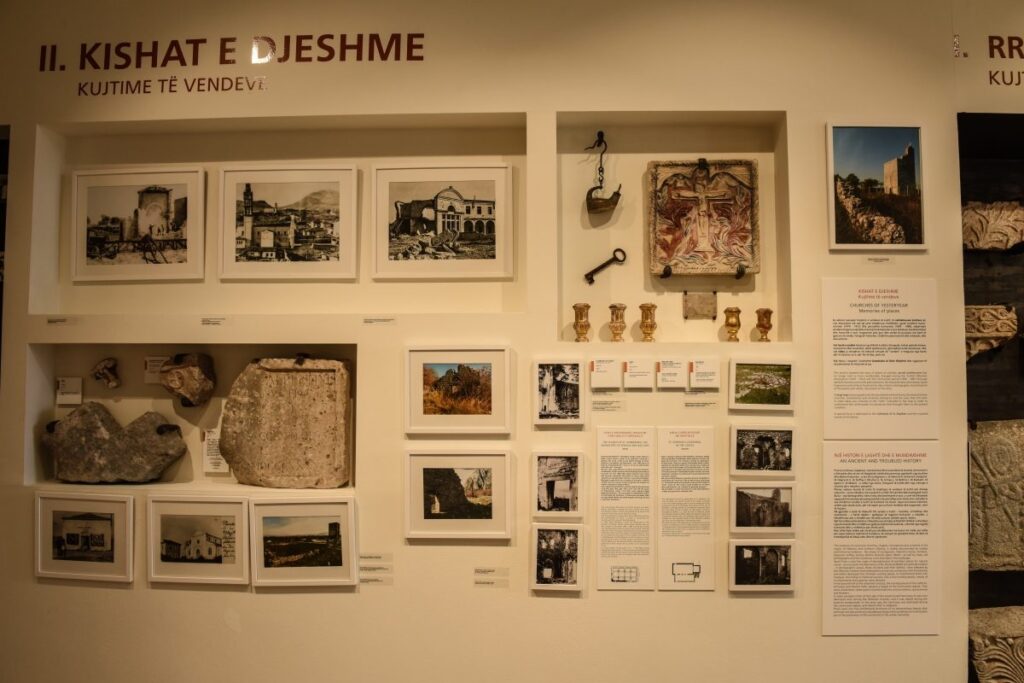
II
Kishat e djeshme
Kujtime të vendeve
Yesterday's churches · Memories of places
Churches that no longer exist, or were transformed under Ottoman rule and the communist regime, told through historic photographs, stone fragments and a large map of the diocese.
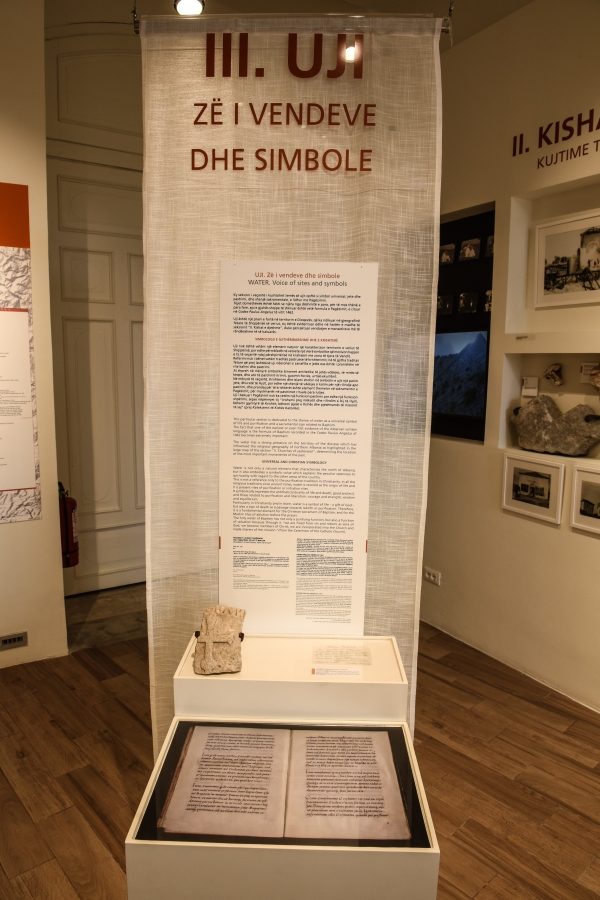
III
Uji
Zë i vendeve dhe simbole
Water · Voice of places and symbols
Water as the sign of Baptism. The section presents the Codex Paulus Angelus of 1462, whose baptism formula is one of the first written records of Albanian.
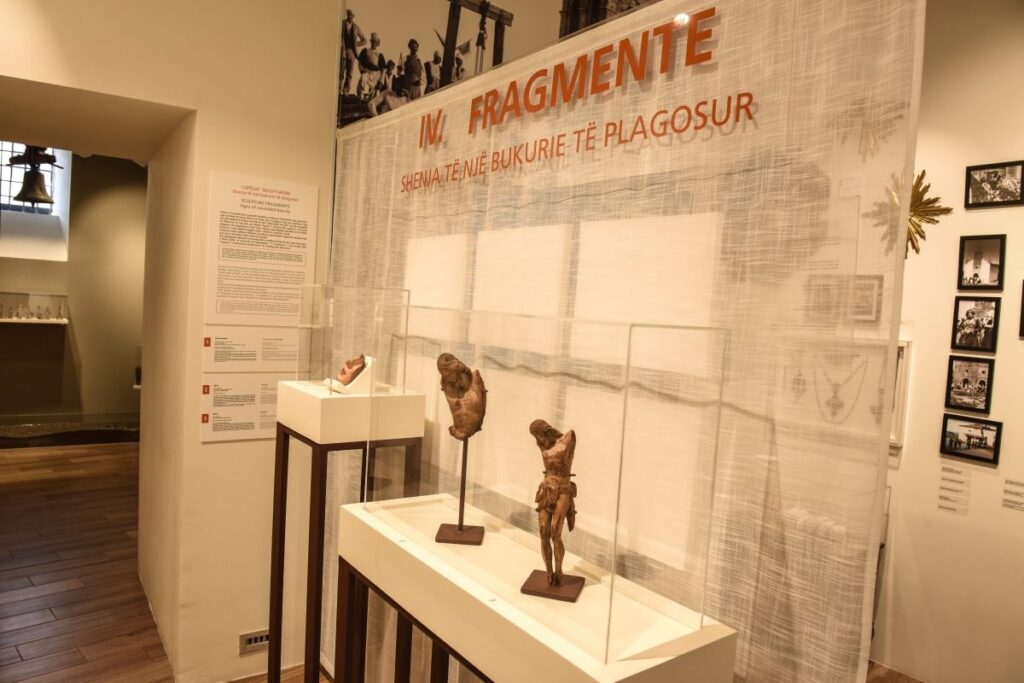
IV
Fragmente
Shenja të një bukurie të plagosur
Fragments · Signs of a wounded beauty
Wooden sculptures wounded by persecution. Among them is the wooden cross that started the collection in 1994, saved from the fire.
V
Skulpturat
Fshehje: shenja të një bukurie të ruajtur
Sculptures · Concealment: signs of beauty preserved
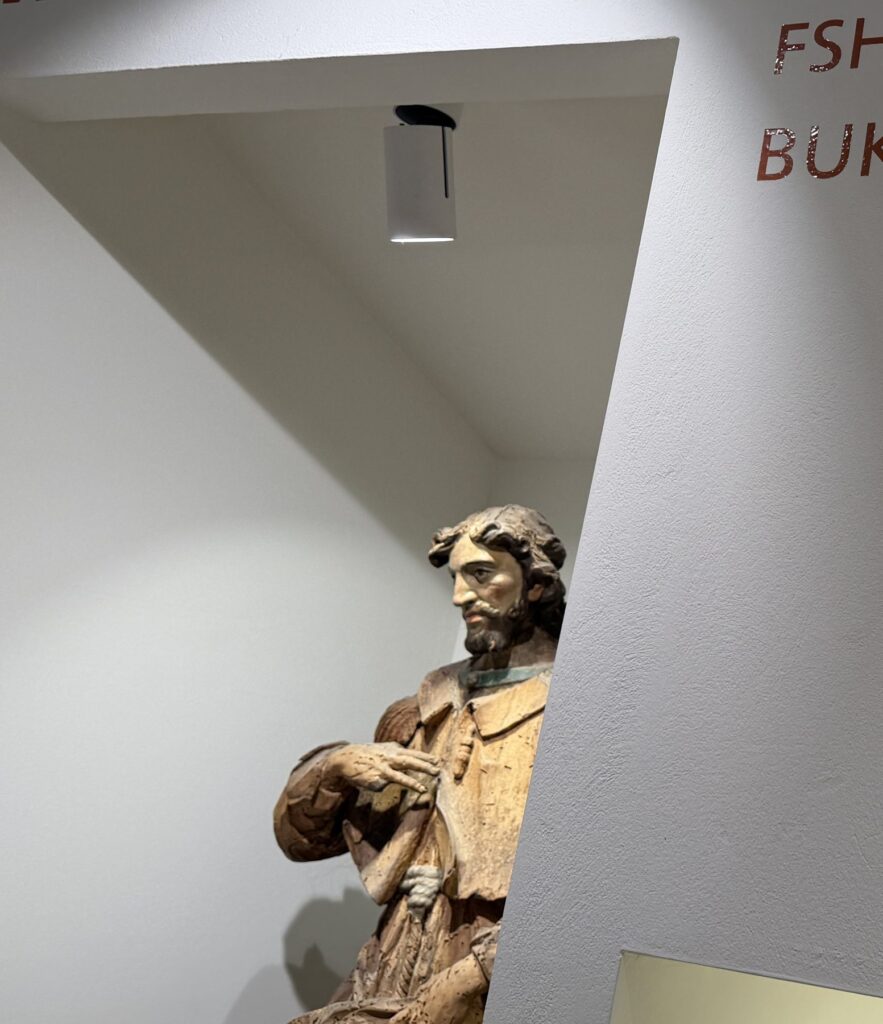
The wooden statue of St Rocco, which a family in Juban walled up inside their house to save it from the regime, and a half-bust of St Nicholas.
VI
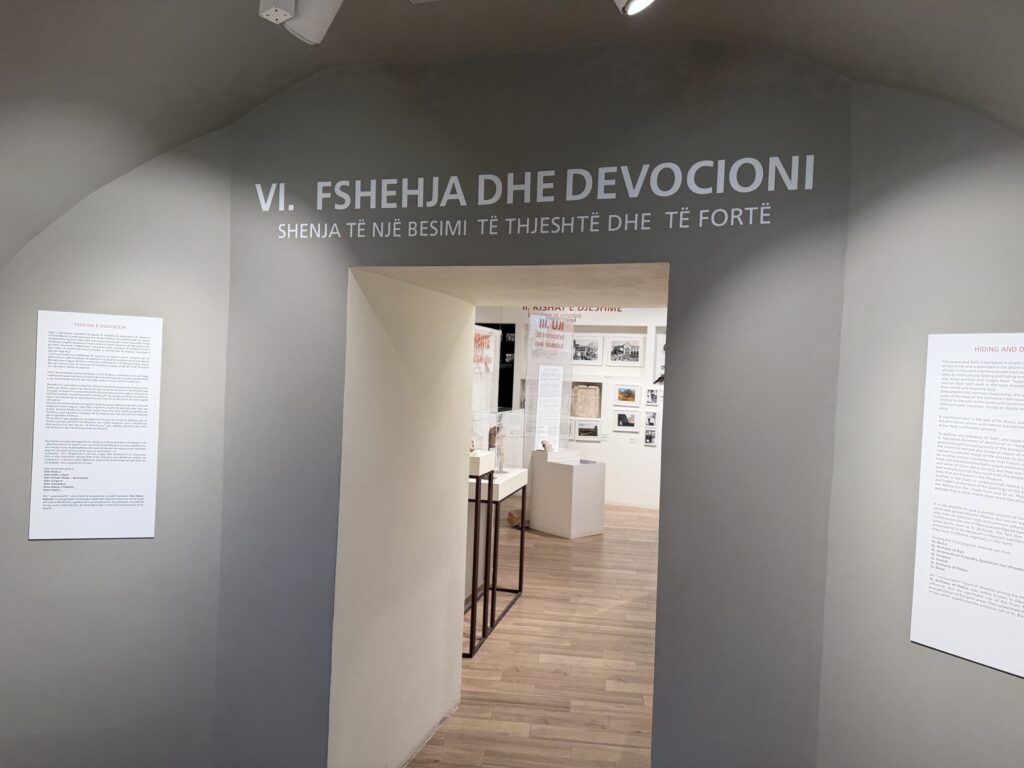
Fshehja dhe devocioni
Shenja të një besimi të thjeshtë dhe të fortë
Hiding and devotion · Signs of a simple, strong faith
At the foot of the cathedral’s bell tower: images of saints, crosses and sacred vessels that the faithful hid in walls and cellars. Above hangs the bell of St Rocco.
VII
Veprimtaria e Kishës
Shenja të një uniteti të pandërprerë asnjëherë
The Church at work · Signs of a unity never broken
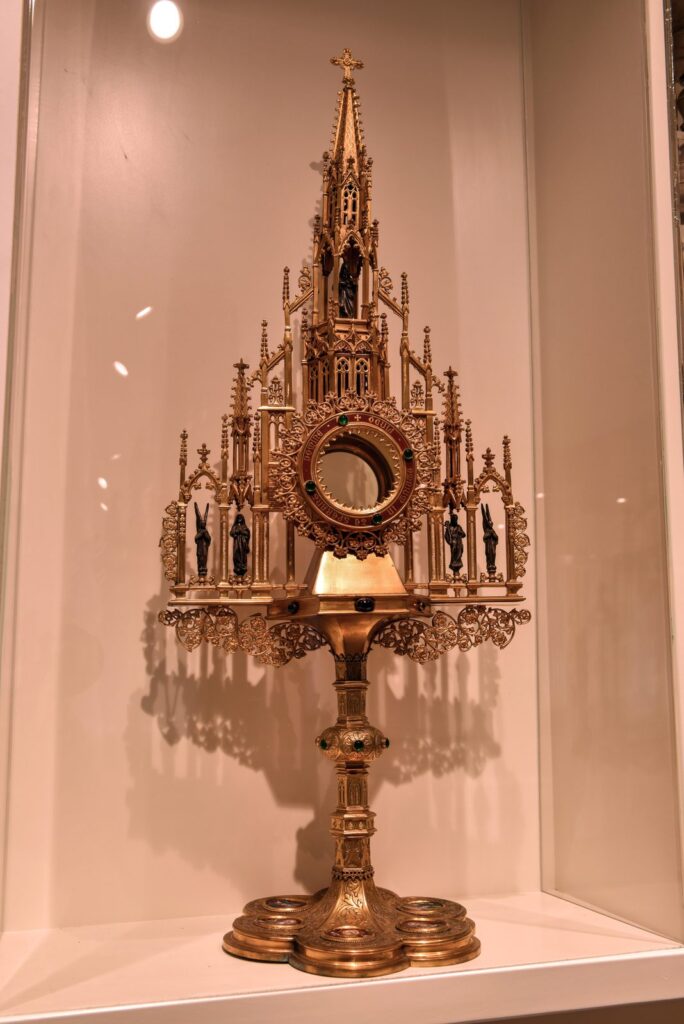
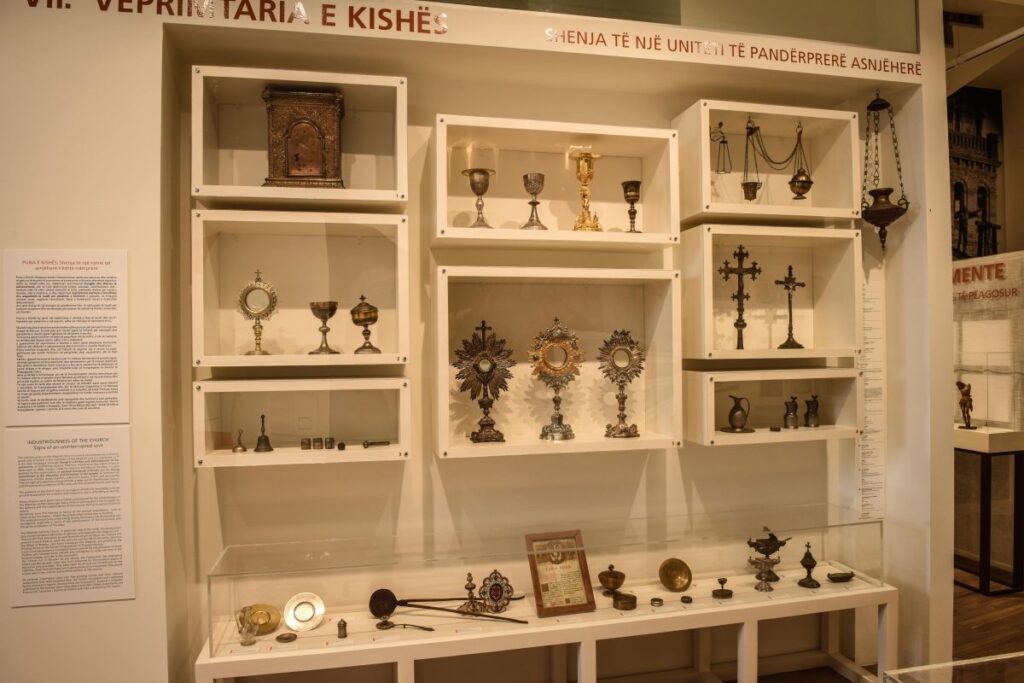
Chalices, monstrances (the oldest from the 17th century), missals and Catholic magazines: witnesses to the Church’s liturgy, its schools and its printing presses.
VIII
Kambanat
Zëra që thërrasin popullin
Bells · Voices that call a people
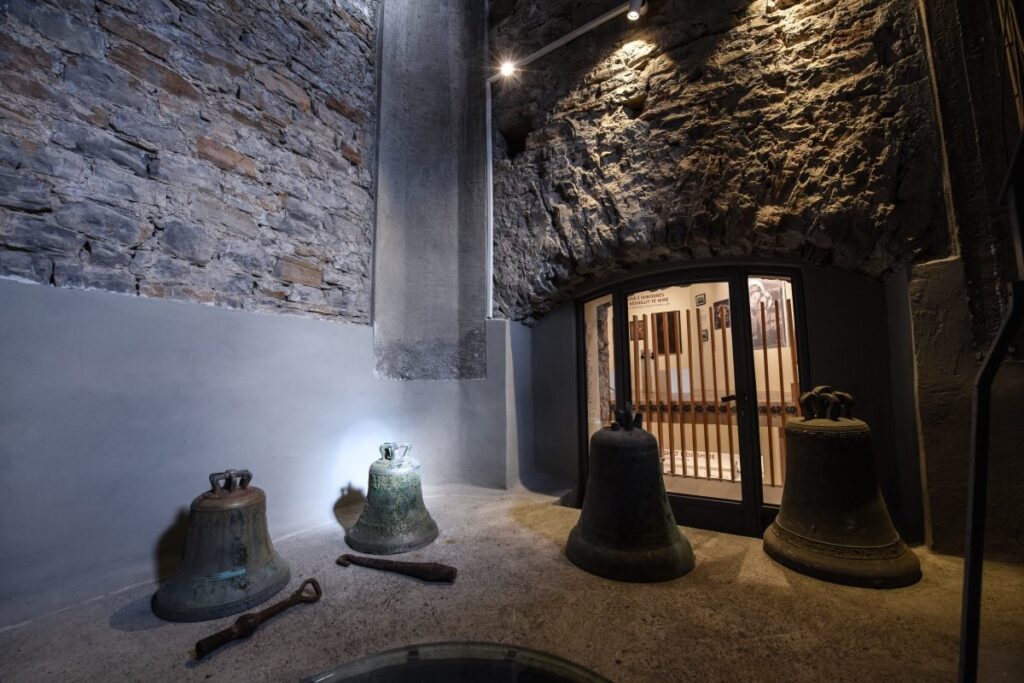
On the stairs to the first floor: Mass bells, and in the bell tower the great bells that call the people openly.
Kati i parë · First floor
Zëra, fytyra, dëshmi në kohë
Voices, faces, testimonies in time

IX
Zoja jonë e Shkodrës
Zoja e Këshillit të Mirë
Our Lady of Shkodër · Our Lady of Good Counsel
Patroness of Shkodër and of Albania, celebrated on 26 April: the legend of the icon that left Shkodër for Genazzano in 1467, and her cult in paintings, images and songs.
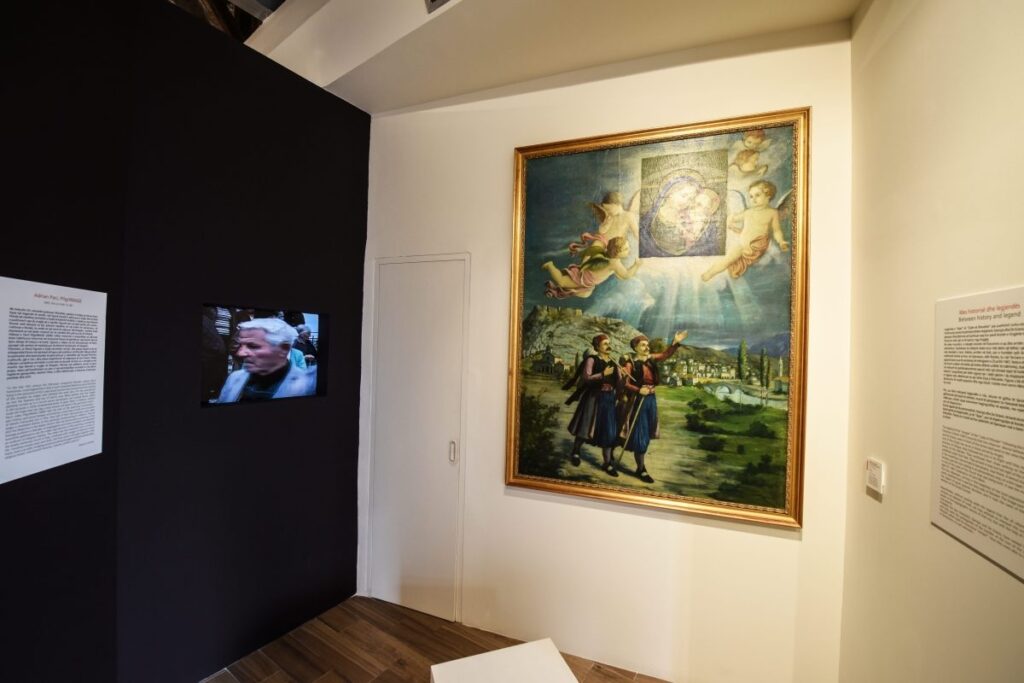
X
Pelegrinazhi
Pilgrimage
The video work PilgrIMAGE (2005) by Shkodër-born artist Adrian Paci, one of the museum’s most important works, and Kolë Idromeno’s painting of the icon’s legend.
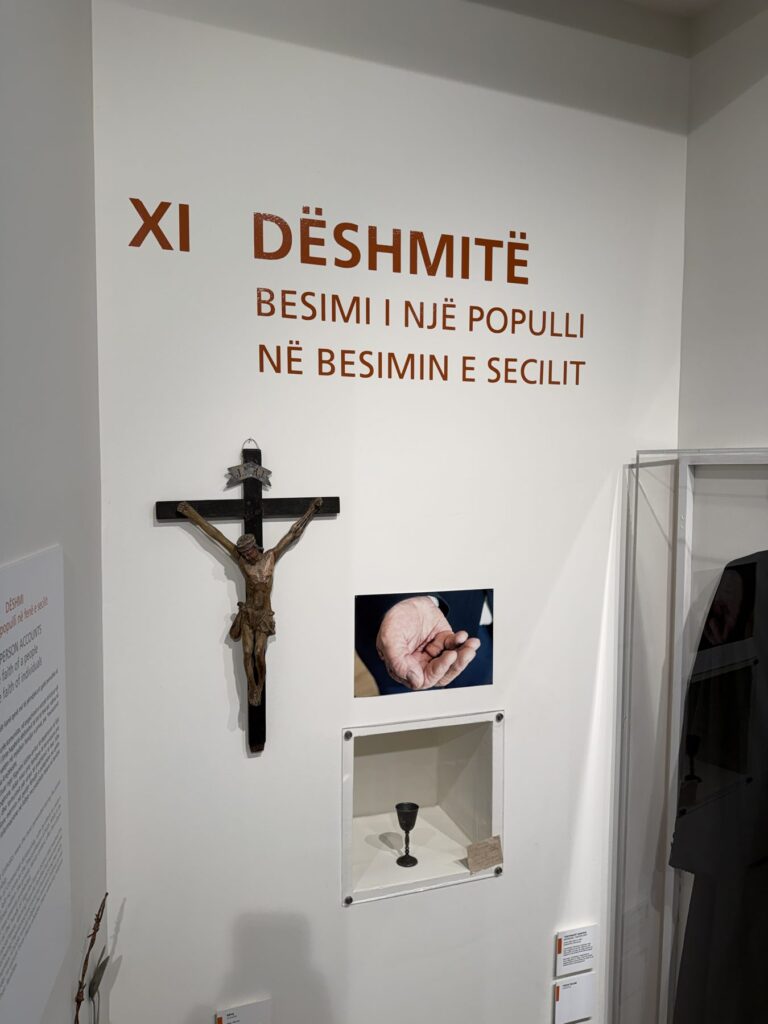
XI
Dëshmitë
Besimi i një populli në besimin e secilit
Testimonies · The faith of a people in the faith of each
Faith lived in secret under the dictatorship: Mass at night in private homes, coffee cups in place of chalices, and the testimony of Ernest Simoni.
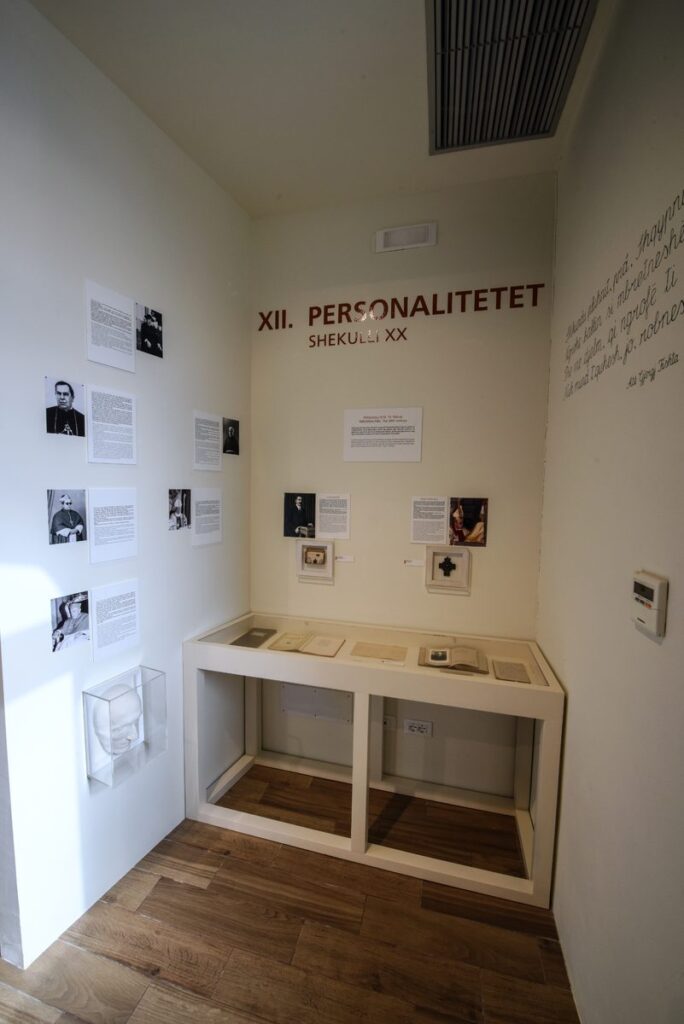
XII
Personalitetet
Shekulli XX
Personalities · 20th century
Eight figures of the 20th century, among them Fr Gjergj Fishta, Luigj Gurakuqi, Dom Ndre Mjeda and Cardinal Mikel Koliqi.
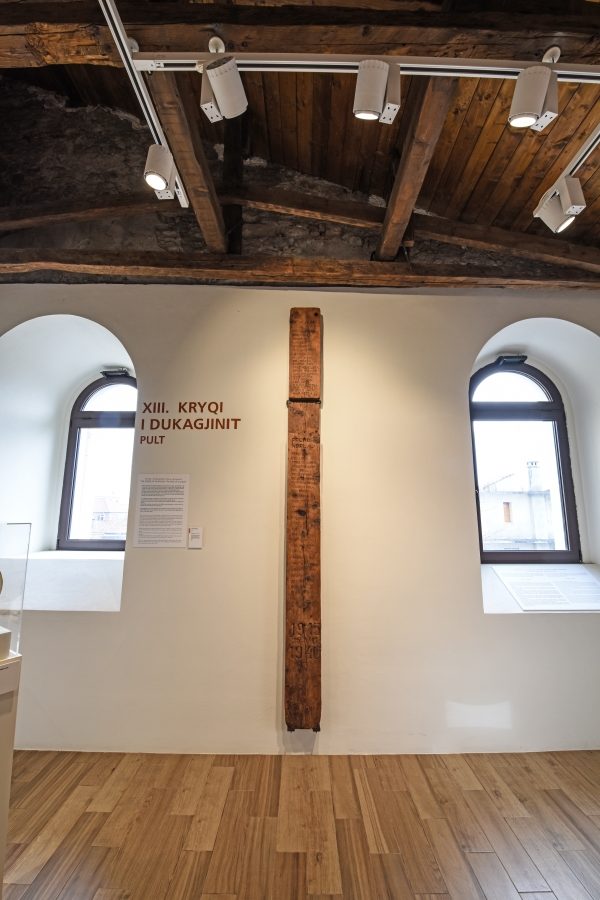
XIII
Kryqi i Dukagjinit
Pult
The Cross of Dukagjin · Pult
The great wooden cross that the village of Plan raised in 1940 for those who fell in the battle of 1915, their names carved into it. The regime pulled it down.
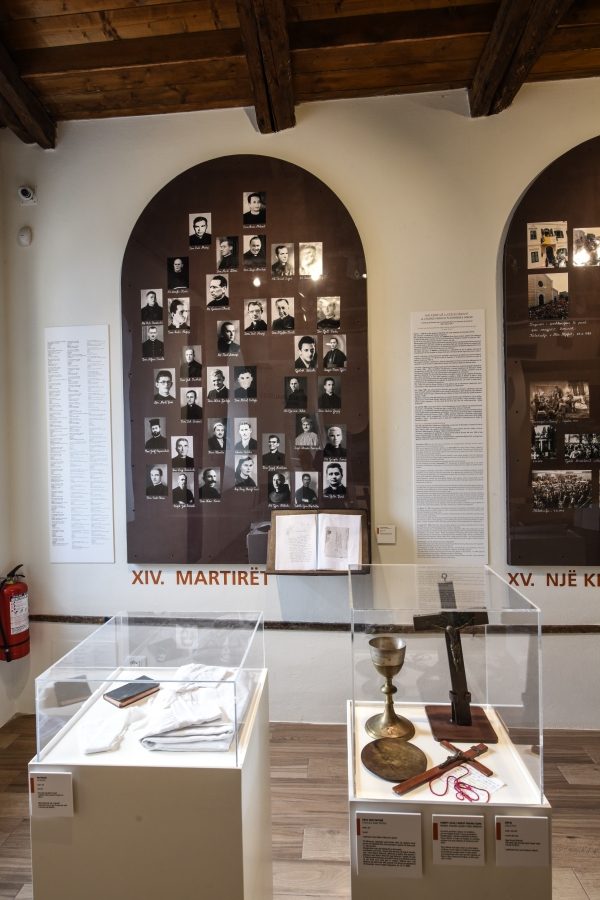
XIV
Martirët
Shenja të një njësie që asnjëherë s’është ndërprerë
Martyrs · Signs of unbroken unity
Portraits, letters and belongings of the 38 martyrs of communism, beatified in Shkodër on 5 November 2016.
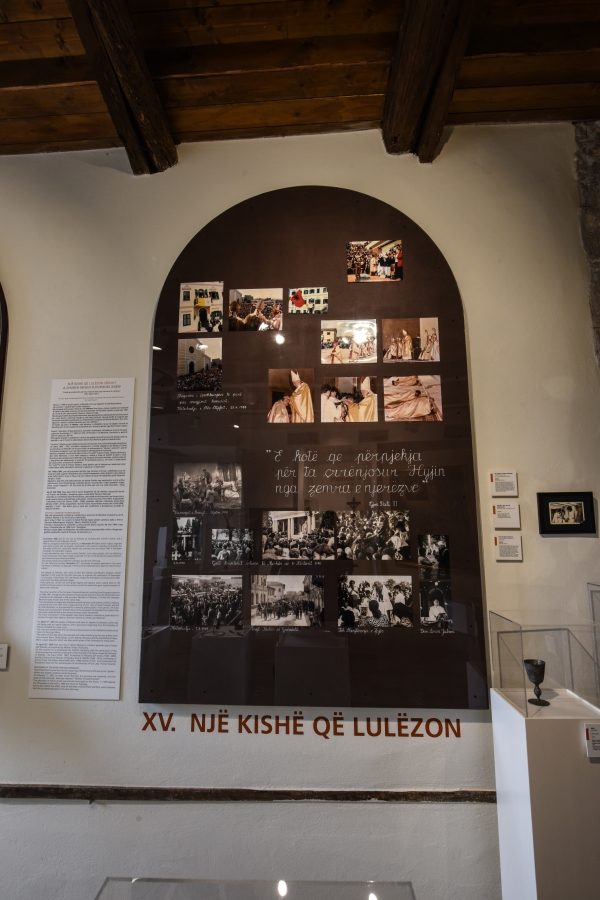
XV
Një kishë që lulëzon
A Church that flourishes
The rebirth: the first public Mass at Rrmaj cemetery on 4 November 1990, the taking back of the cathedral on 7 March 1991, and Pope John Paul II’s visit on 25 April 1993.

XVI
Sot
Shenja të një tradite të pandërprerë asnjëherë
Today · Signs of an unbroken tradition
The visit ends with today’s feast of Our Lady of Good Counsel: “Tradition is not the worship of ashes, but the preservation of fire.” (Gustav Mahler)
Section VIII is on the stairs between the two floors.
Timeline
Two thousand years on one wall
The timeline on the ground floor, in eight moments.
57
St Paul in Illyricum
Before AD 57 St Paul writes that he has preached the Gospel “as far as Illyricum” (Rom 15:19).
387
Shkodër, a church capital
Bassus, the first known archbishop of Shkodër, capital of the Roman province of Praevalitana.
1479
Siege and fall
After two Ottoman sieges Shkodër falls. The bishop’s see leaves the city until 1742.
1555
Buzuku’s Missal
Gjon Buzuku publishes the Missal, the first book printed in Albanian.
1895
Patroness of Albania
The Third Council of Albania meets in the cathedral and proclaims Our Lady of Shkodër patroness of Shkodër and of Albania.
1967
Religion banned
Every form of religion is banned by law. In 1973 the Atheist Museum opens in Shkodër.
1990
The first Mass
On 4 November the first public Mass in 23 years is celebrated at Rrmaj cemetery.
2016
Thirty-eight beatified
On 5 November, at St Stephen’s Cathedral, the 38 martyrs of communism are beatified.
Look for these
Four things the museum asks you not to miss
Chosen by the museum in its own itinerary.
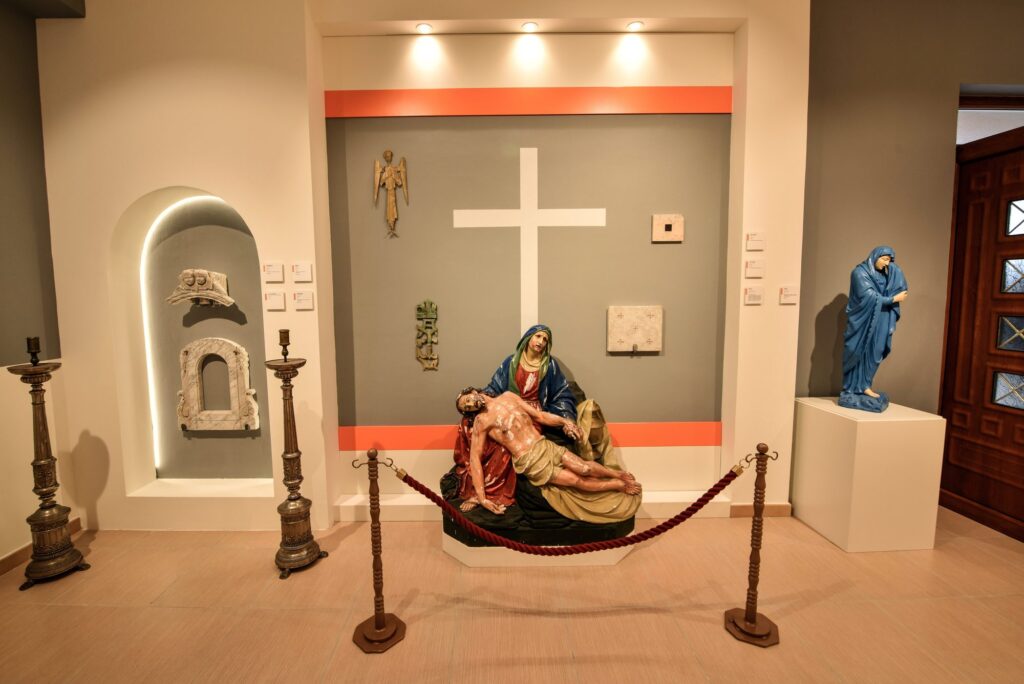
The Pietà
Zoja e Dhimbshme
The statue that greets you at the entrance.
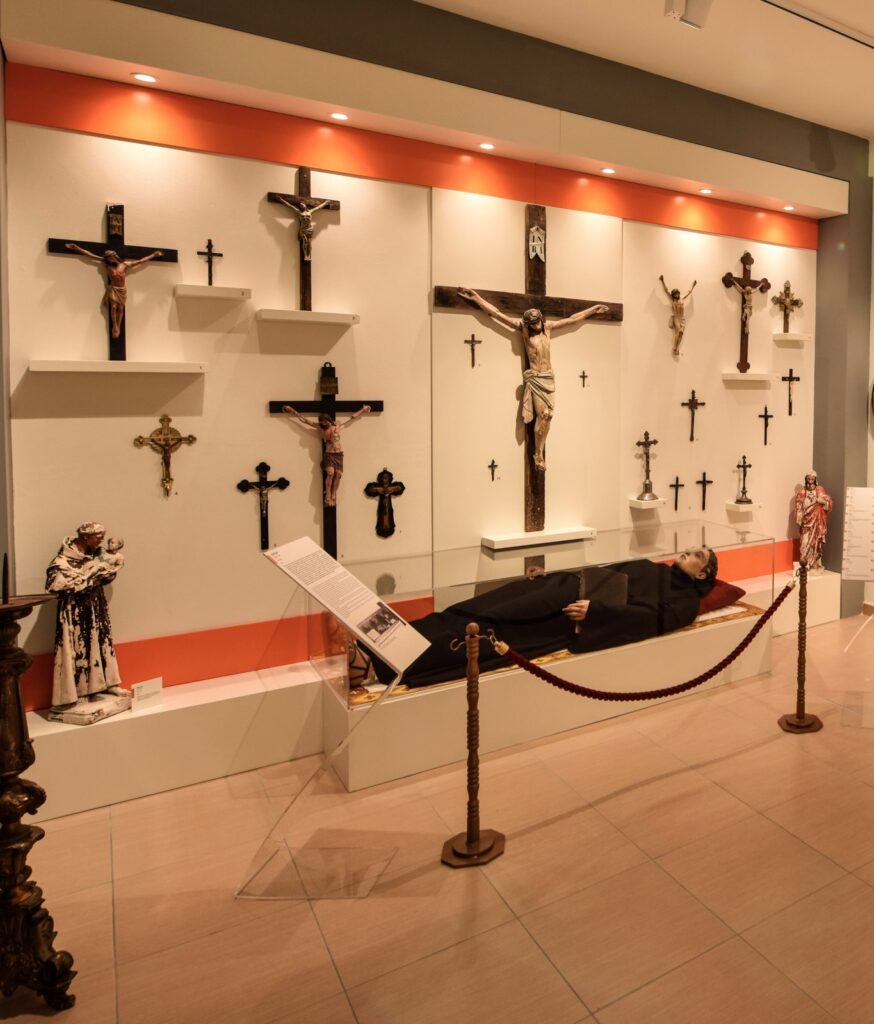
The wooden cross
Kryqi prej druri
With the statues of St Anthony and the Sacred Heart, it bears witness to faith's “resistance” against the dictatorship.

St Prosper
Shën Shprosperi
A statue whose story is told in its own caption.

Vessels and vestments
Vazot e shenjta
They lead you through the hall: a living memory of the Catholic men and women who were “witnesses of faith”.
From the cases
Look closer
Each with its story, from the museum's own labels and texts.
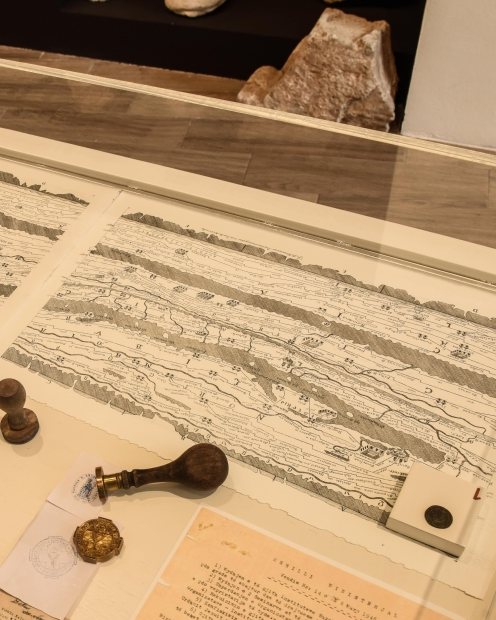
Tabula Theodosiana
Copy of a 4th-century Roman map · section I
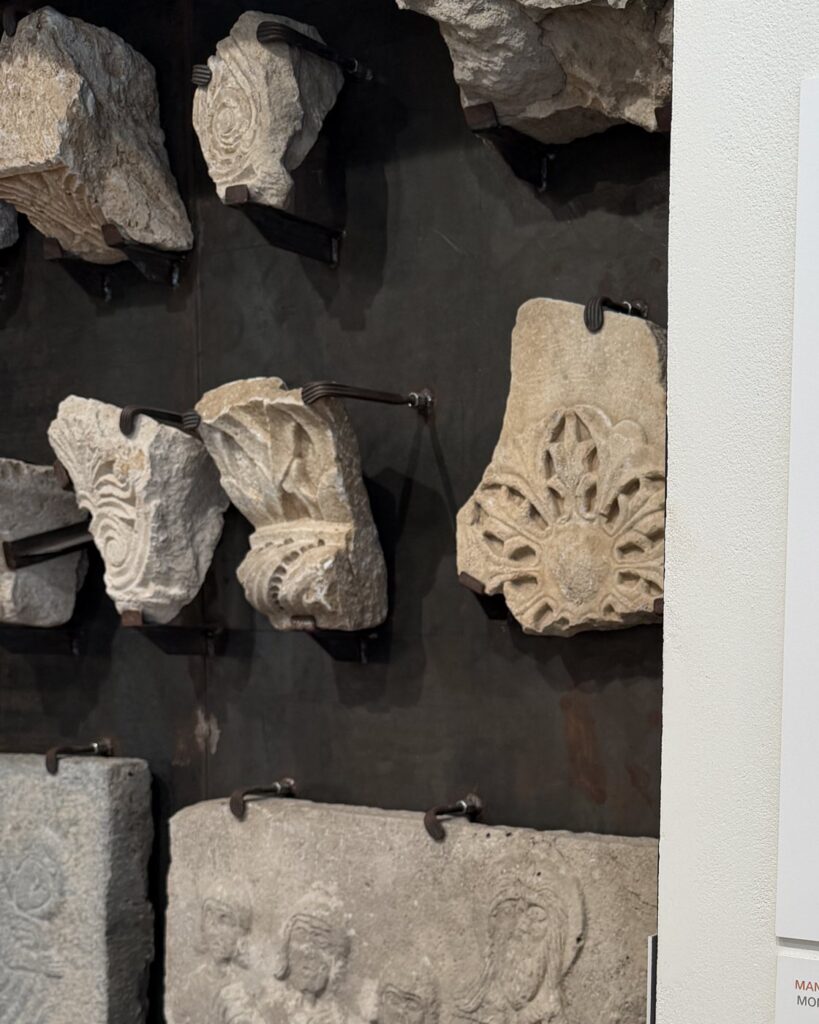
Gurë të gdhendur
Carved stones · 12th–13th century · from the monasteries of the diocese
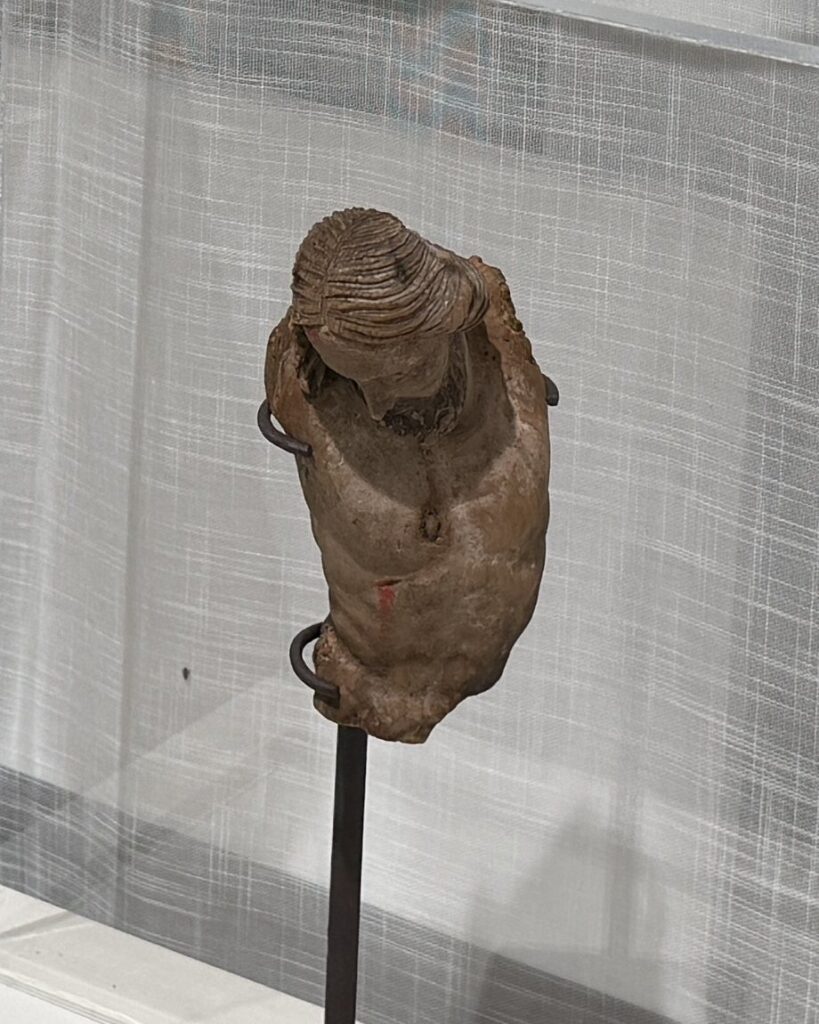
Kryqi i Lezhës
The Lezhë cross · 18th–19th century · the first object of the collection, 1994
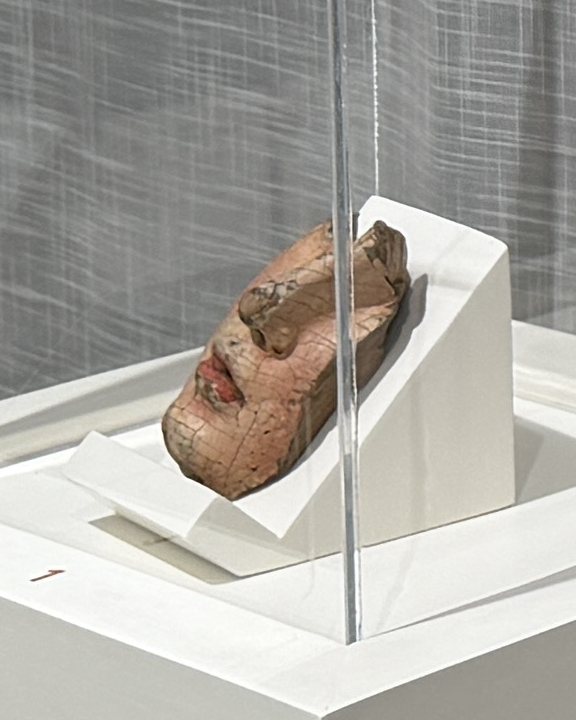
Zoja e Rruzares
Our Lady of the Rosary, a fragment · 16th–17th century · from Ganjolla, Juban

Shën Rroku
St Rocco · 16th–17th century · walled up in a house in Juban
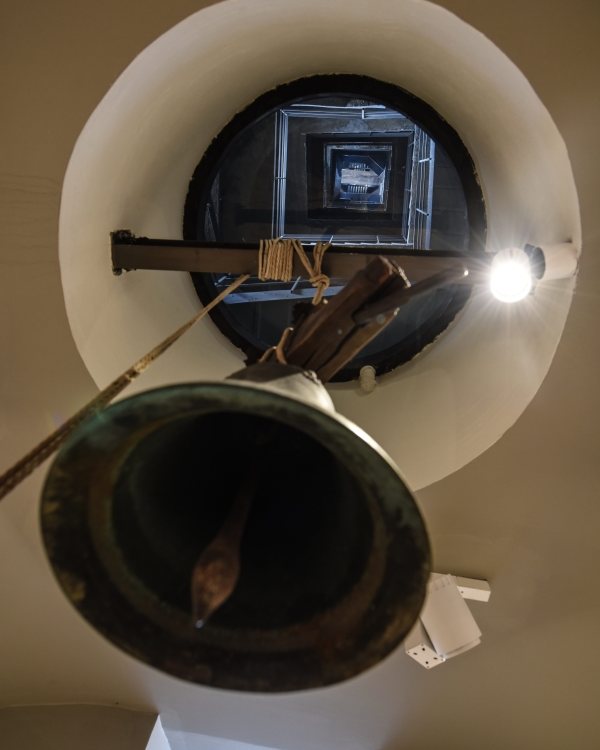
Kambana e Shën Rrokut
The bell of St Rocco · at the foot of the cathedral bell tower
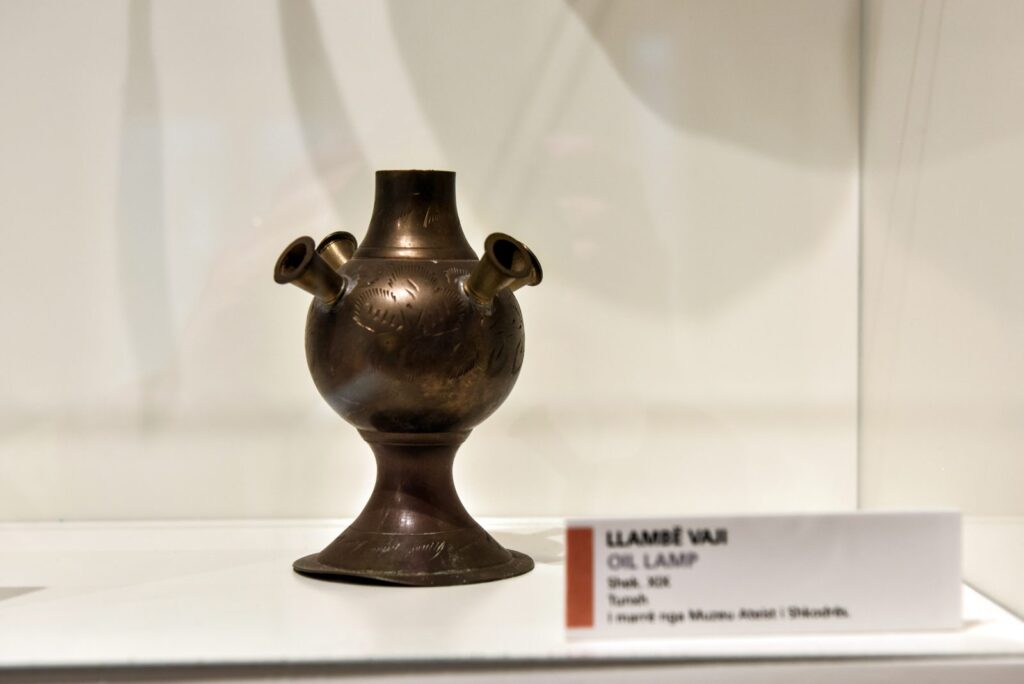
Llambë vaji
Oil lamp · 19th century · from Shkodër's former Atheist Museum
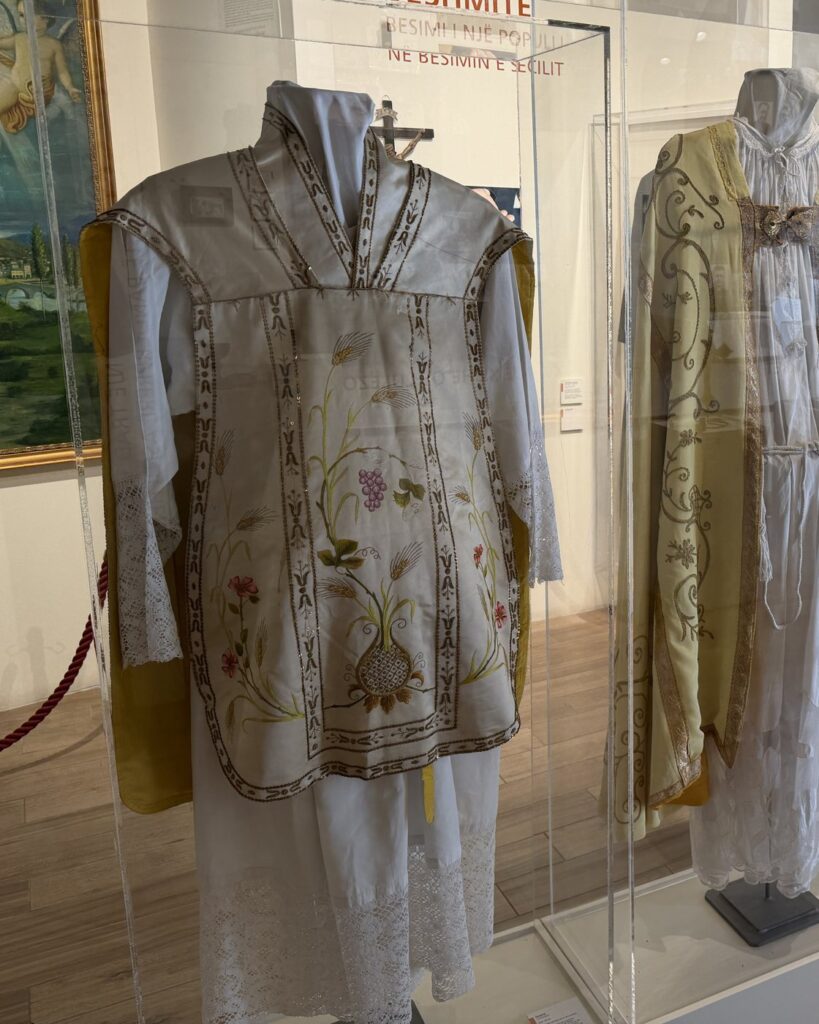
Petka liturgjike
Liturgical vestments · section XI, Testimonies
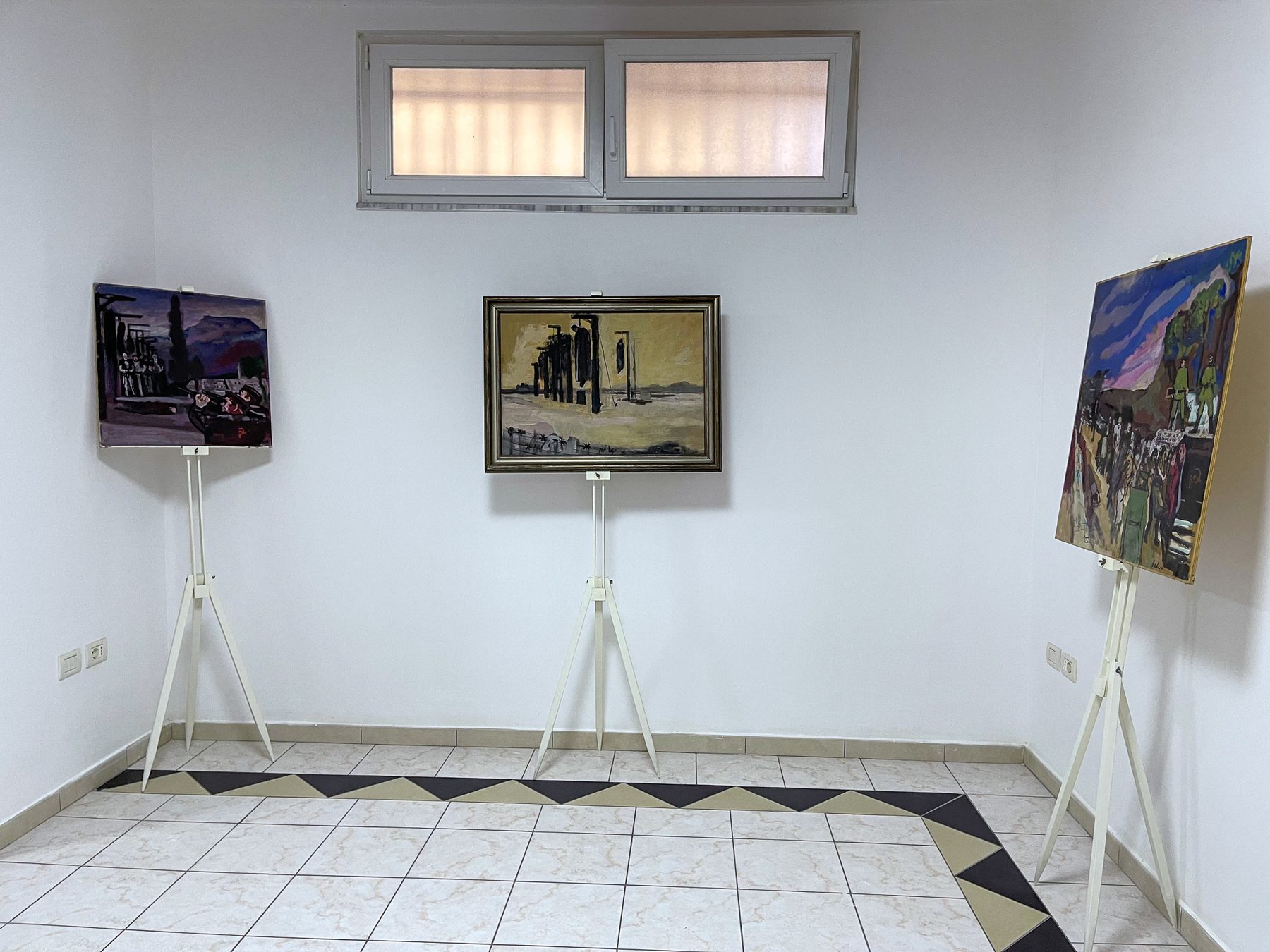
Pinakotekë “Lin Delija”
His love for his land, the pain of exile, and hope for a free Albania
Lin Delija was born in Shkodër in 1926 and fled to Italy in 1949. The gallery shows temperas from 1980–83 on two themes: faith, and the persecution of Albania.
“Muzeu mëmë” · The mother museum
A museum under the open sky
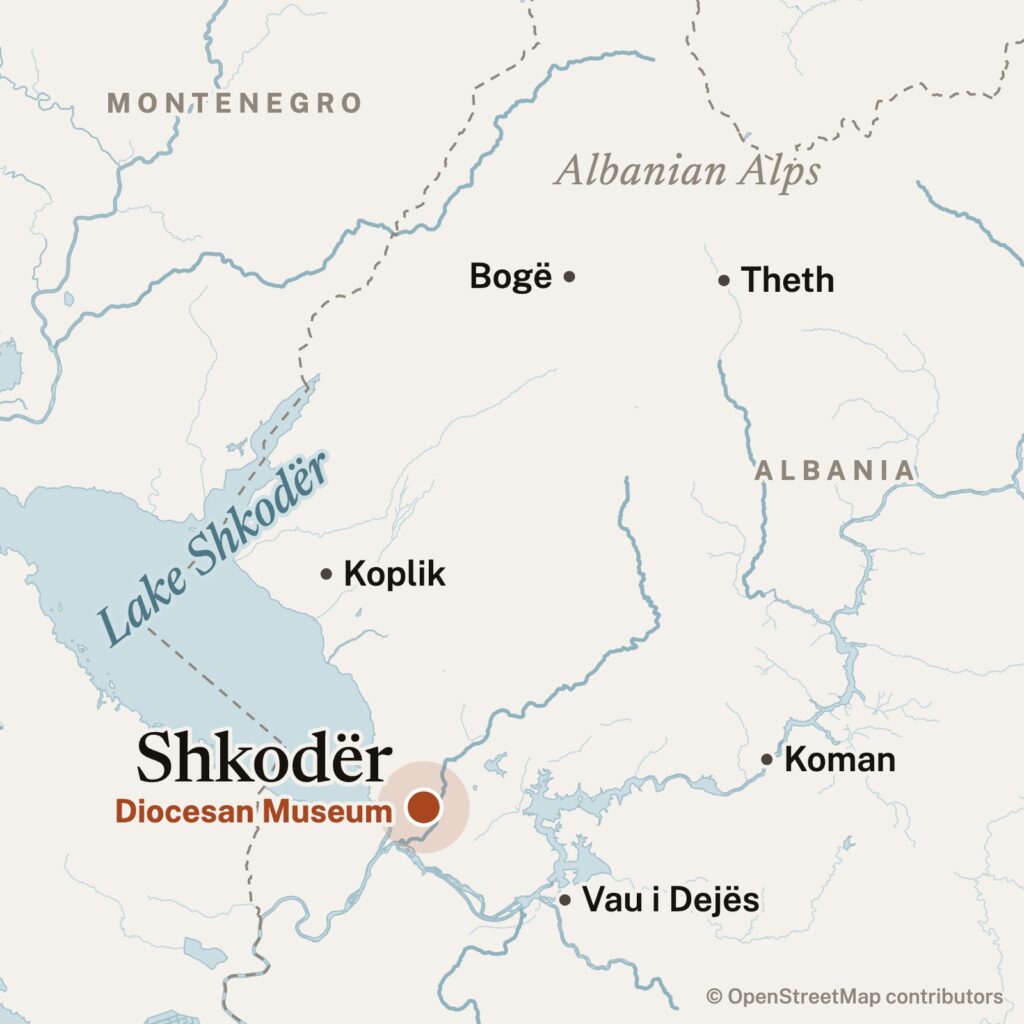
The museum is tied to the whole diocesan territory, itself an open-air museum to discover. At the end of the visit it points you on to places across the territory that tell the rest of the story.
Seen as part of a museum spread across the land, the Diocesan Museum is a “mother museum”: able to talk with other places and set good things in motion, through partnerships with institutions, other museums, research institutes and universities, and links with tourist routes.
Closed · opens tomorrow at 09:00
All sixteen sections, in about thirty minutes.