Kush jemi · About the museum
Born to gather, keep and make known a heritage of faith and culture.
The Diocesan Museum holds the history of how the Catholic faith and the culture of the Albanian people are bound together, above all in the lands of the Archdiocese of Shkodër-Pult.
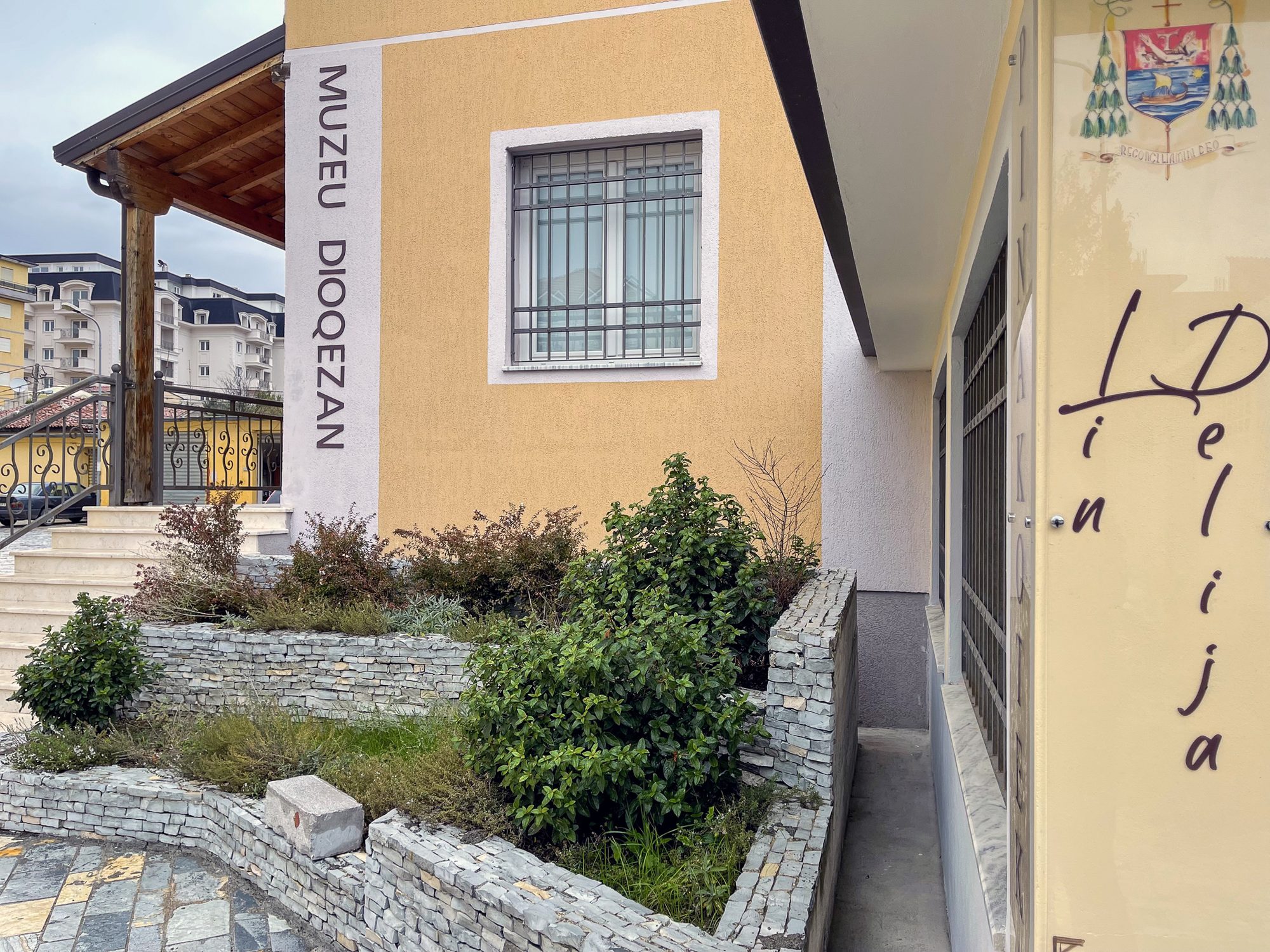
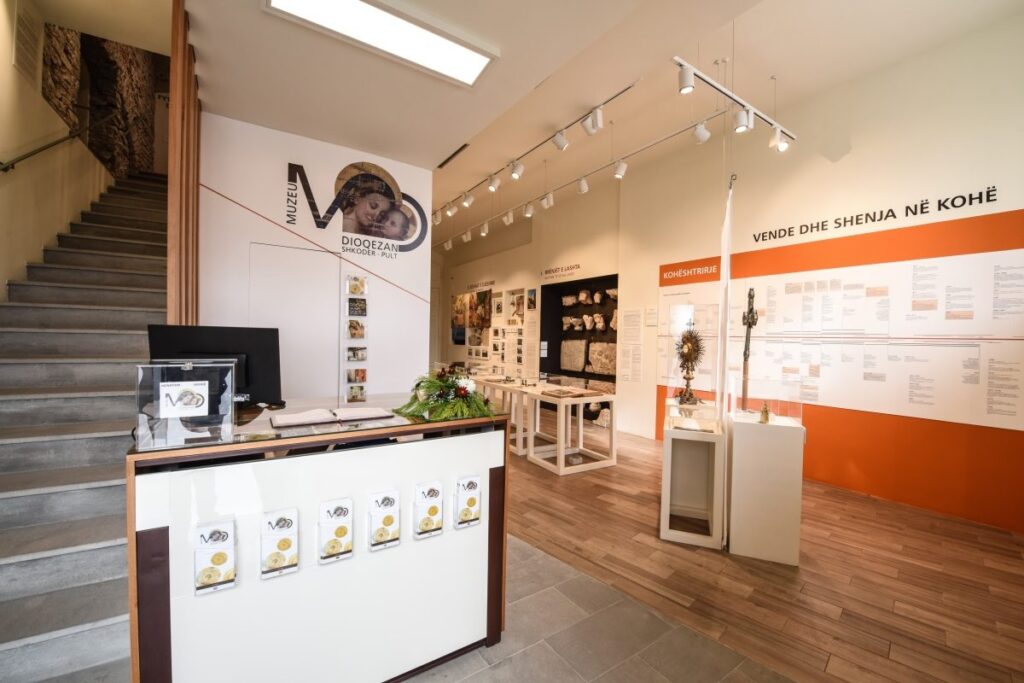
16seksione, dy kate
sections, two floors
Prezantim · Introduction
A faith with apostolic roots, often opposed
The north of Albania, where the Catholic tradition has always been strongest, has witnessed and kept a faith rooted in the Christianity of the apostles. It was often opposed, in attempts to put out its fire; a fire that broke out again from the ashes under which it had been forced to stay.
So the museum is not only about protecting what belongs to our history. It is a cultural act: to bring visitors face to face with a reality whose consequences are still visible today. Its purpose and value go beyond simple knowledge, towards a deeper wisdom where love of life, a taste for the good and the beautiful, and spiritual élan meet.
The project team chose not to guide the display, but to let the objects guide them. On their own, the objects told a story, many stories in truth, with surprising clarity.
From the museum's presentation
Vendosja · Where we are
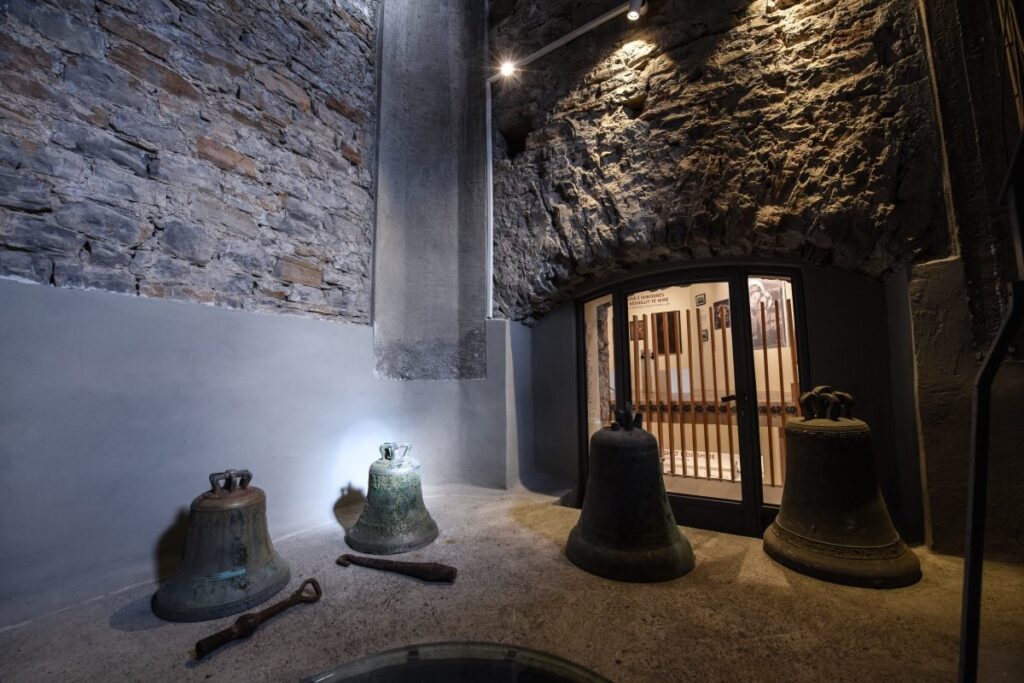
Inside the cathedral, beneath its bell tower
The museum is in the spaces of St Stephen's Cathedral, on its south side and partly beneath the great bell tower: a direct link between the space of worship and the space of the museum.
Cathedral and museum are one project. The cathedral is part of the museum's story, and of the history that all the objects share. Through the museum, visitors can come to know the Christian tradition and culture of the Diocese of Shkodër-Pult more closely.
Përgjegjësia · Who made it
The people behind the museum
Built on scientific criteria, so that every visitor takes away as much as possible.
Founded
On the initiative of Archbishop Angelo Massafra OFM
Former Archbishop of Shkodër-Pult
Since 2026
Run by the Zoja e Shkodrës parish
Entrusted by Archbishop Giovanni Peragine. Parish priest: Dom Mikel Pllumaj
Ester Yembi Pagnoni
Landscape architect. Coordinated the project and carried out the interior design.
Dr Francesca Radaelli
Curator of the museum itinerary.
Anna Camisasca
Architect. Designed the museum spaces.
Erica Koumbang O'Mbai Pagnoni
Exhibition design and the museum's graphic identity.
Irma Temali
Architect from Shkodër. Designed the Multimedia Hall.
Fr Luigi Aluisi OFM
Wrote most of the captions.
Misioni · Our mission
A museum is a permanent, non-profit institution in the service of society and its development. It is open to the public and researches the tangible and intangible evidence of humanity and its environment, which it keeps, exhibits and studies to inform, educate and raise the awareness of the public.
The ICOM definition (2004), on which the museum bases its mission
1
To keep objects belonging to church bodies, of religious, historical and artistic interest, that for various reasons can no longer be kept where they came from.
2
To study, conserve, protect, document and promote the Church's cultural heritage, as evidence of the presence and continuity of Christianity across the Archdiocese of Shkodër-Pult.
Shërbimet · What we offer
More than a visit
For schools, researchers, parishes and anyone who wants to go deeper.
Visitors
Welcome and bookshop
Leaflets, postcards, short guides; panels, learning sheets and multimedia points in the rooms.
Visitors
Staff in the rooms
Part of the team looks after the visit and helps visitors.
Schools
Education
Activities for every school level, in the museum and outside it, open to all pupils and teachers.
Schools
Teacher training
Courses for teachers of every level and subject.
Adults
Courses and talks
Courses, guided visits, seminars and meetings.
Research
Works not on display
Can be seen for study, by written request to the director.
Research
Images of the works
On request, with a reproduction fee depending on use.
Research
The diocesan inventory
Catalogues and the museum's database, consulted with the museum's staff.
Research
Ongoing research
On the works and their places of origin, shared through displays and publications.
Everyone
Temporary exhibitions
Every year, as the programme and funds allow.
Parishes
Advice
For students, researchers, teachers and parishes caring for their own heritage.
Events
The hall, after hours
With the director's permission, for cultural events.
Karta e shërbimeve · Our service charter
What you can expect from us
Equality
Everyone is treated alike, whatever their nationality, gender, language, faith or politics, with special care for visitors from abroad, people with disabilities and those facing social or cultural barriers.
Continuity
A regular, reliable service. If something might get in the way, we tell visitors in advance.
Participation
Your comments, advice, requests and suggestions are read by the museum's management.
Courtesy
Clear, simple language and as little bureaucracy as possible. Our staff give their name.
Safety and privacy
Every safety rule is followed. Personal data is used only for the museum's purposes, never shared with third parties.
Efficiency
We keep improving our services with the resources we have.
Your rights
Clear and accurate information about our services, and every means to contact us. Guided visits, seminars and educational activities need a booking, by phone during opening hours.
We ask you to
- not smoke in the museum
- not touch the works on display
- not use flash
- follow the instructions of our staff
Ankesa dhe sugjerime · Complaints and suggestions
Something not right? Tell us.
Fill in the form and hand it in at the desk, or email it. We review every complaint and reply within 30 days. Ideas to improve the museum are welcome too.